simbainstitute

Mega Dropdown Courses

Business

top certifications to look for in a python programming course in surat 870x457

The Python programming courses in Surat and other places have become the most in-demand programming language across industries in Surat and beyond. This is a skill required in many fields, from tech startups to data-heavy corporations.  So, if you’re looking for a professional upgrade, joining a Python programming course in Surat seems a wise decision. The various certificate courses available may leave a person befuddled.  The Top Python programming course in Surat is worth giving a try: PCEP/PCAP- These certifications are globally recognized and are designed to produce Python programmers. For a certification, this is best for those at beginner and intermediate levels. Microsoft Python programming certification: Microsoft backs this certification. Therefore, this one is highly regarded by potential employers. The course centers around using Python for data science and automation, with an emphasis on people wanting to become data analysts and beginners exploring enterprise Python applications.  Google IT Automation with Python: Google offers a program of 6 courses, constituting Python for IT automation, with hands-on projects. This course gains credibility due to its association with Google. Also, this course has a unique methodology focusing on real-world scripting and automation skills. Best suited for IT professionals, system admins, and support engineers.  IBM Python for Data Science: The IBM course focuses on applying Python in the context of data science. So, if you’re inclined toward data science, this certification course will help you learn Python with the right kind of tools and with applications in real-world scenarios. This is best suited for aspiring data scientists and professionals in the data analytics field.

Top certifications to look for in a Python programming course in Surat Read More »

why should i take admission in an online marketing course in surat 870x457

Expertise in online marketing has become a promising career choice as there is a boom in the online marketing industry. However, if you are here researching why you should join an online marketing course in Surat, then only this one reason will not satisfy you. So, in the blog, we will provide an elaborate list of reasons why you should go for an online marketing course in Surat or any other city. Given below is the list of reasons good enough for anyone to join an online marketing course in Surat – Updates on marketing trends – If you take up an online marketing course, you will learn tips and tricks that will help you stay updated on the latest market and industry trends of your target audience. Flexible Schedule –  Taking up an online marketing course will enhance your learning experience as you will get enough flexibility in time. You will then be able to learn and also fulfill your other personal and professional commitments. Budget Friendly –  Online courses are easier on the pocket than offline courses. You are able to save on transport and lodging costs, and also, with an online course, you can easily continue your full-time professional commitments.  Development of digital skills – Yes, one may develop these skills while working at any digital marketing agency or even in some other IT-dedicated jobs, but if in case one wishes to have that in-depth knowledge of the digital marketing world, then for such a person admission to an online marketing course will be a more intelligent choice.

Why should I take admission in an online marketing course in Surat? Read More »

whatsapp image 2024 10 07 at 4.24.20 pm 870x457

Nowadays, finding a job for someone with zero computer knowledge is impossible. India is shifting everything into digital mode; hence, basic computer knowledge is necessary for jobs.  In the guide today, we will discuss how completing a computer course in Surat or any such big city can be helpful for a person. Benefits associated with the completion of a computer course are as follows-  Improves employment chances  Having sound basic computer knowledge shoots up employment chances big time. Knowing everything about computers is unnecessary, but having a certain basic understanding can help you do your assigned work efficiently. Improves Productivity- With sound computer knowledge, you can do more work faster. This will automatically increase your productivity, making you a more reliable resource for your employer.  Opens new career opportunities-  Sticking to one career choice for life can harm your career growth. So, one should always keep upgrading to new skills. Upgrading your computer knowledge will open new, more promising career doors for you.  Possible job opportunities after a computer course-  Help Desk Technician IT Support Specialist  System support expert Technical Support Expert Conclusion-  These are all the benefits you will get after completing your computer course in Surat or anywhere else in India. In cities like Surat and Ahmadabad, there are innumerable career opportunities to explore with a degree in computer course.

What are the benefits of completing a computer course? Read More »

whatsapp image 2024 09 17 at 1.22.59 pm 870x457

Do you find color theory interesting? Are you also curious about making eye-pleasing and user-friendly designs on your screen? If yes, then you have the right excitement to become a website designer. All you need is a little bit of creativity, and some technical skills, and you’re good to go! With the right guidance through various courses, workshops, and practice, you can definitely ace the industry. One cannot imagine life without the internet in today’s age. From personal branding to business owners, everyone is looking for a strong online presence. Here are 6 reasons that make website design a rewarding career choice: High demand for skilled designers for online businesses. Rise in salary as you gain experience. Work-from-home opportunities. Connections with other professionals, including marketers, developers, and content creators. Not only this, but several career paths open once you gain experience. You can choose any from UX design, UI design, front-end development, project management, to digital marketing. But what are the necessary skills for website design? Let’s take a look. Software knowledge: Adobe Photoshop, Illustrator, Sketch, & Figma. HTML/CSS knowledge. JavaScript and front-end frameworks. UX/UI Design. Basics of web development. Knowledge of on-page SEO. Choosing the right course for website design can provide you with all the knowledge in an organized way. From beginner to advanced level, Simba Institute will provide you with the best course on website design.

Why pursue a career in website design in 2024? Read More »

what is long tail keywords and how to use them 1 870x457

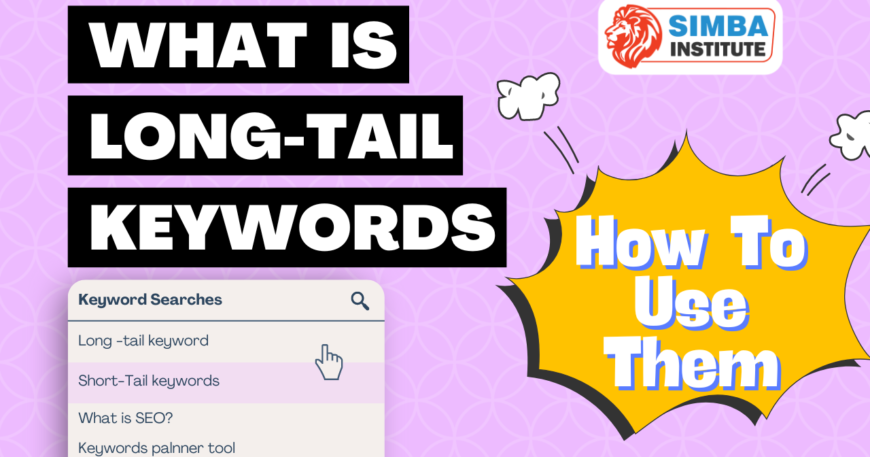
Long-tail keywords include three or more words that refer to specific products, services, or themes. For example, a wide keyword like “shoes” may generate a lot of traffic, but it is also extremely competitive. Long-tail keywords, such as “women’s black leather ankle boots,” are more precise and less competitive. While it may not produce as much traffic, it is more likely to draw customers who are actively looking to buy that specific product. Here’s information about different types of keywords  1. Broad Keywords: Short and general terms. High search volume. Often competitive.Example: “shoes.” 2. Long-Tail Keywords: Longer, more specific phrases. Lower search volume. Less competitive.Example: “women’s black leather ankle boots.” 3. Transactional Keywords: Indicate an intent to make a purchase. Often include action words like buy, order, or download.Example: “buy iPhone online.” 4. Informational Keywords: Used to find information or answers Often start with question words like “how,” “what,” “why.”Example: “how to tie a tie.” 5. Navigational Keywords: Used to find a specific website or page. Directly related to a brand or product.Example: “Facebook login.” 6. Commercial Keywords: Indicate an intent to research or compare products. Often include words like “best,” “top,” “review.”Example: “best digital cameras 2024.” Understanding different kinds of keywords is critical to creating a complete SEO and digital marketing plan. Broad keywords appeal to a large audience but are extremely competitive, whereas long-tail keywords are more specific and less competitive. Transactional keywords indicate a willingness to purchase, whereas informational keywords seek answers or guidance. Navigational keywords are used to find specific websites, whereas commercial keywords denote a research or comparison stage in the purchasing process. Businesses may increase their digital visibility and gather relevant traffic by intentionally selecting different types of keywords. Importance of Long-Tail Keywords: 1. Less Competition: Because long-tail keywords are more particular, they typically face less competition than broader terms. This means that ranking for long-tail keywords is generally easier, particularly for smaller organizations or those operating in niche markets. 2. Higher Conversion Rates: Long-tail keyword searches are more likely to happen later in the purchasing process. They know what they want, thus they are more likely to become consumers. Targeting long-tail keywords can result in increased conversion rates. 3. Better Relevance: Long-tail keywords help to ensure that your content is highly relevant to what users are searching for. This improves the user experience and increases the chances of your content being clicked on and engaged with. How to Use Long-Tail Keywords Effectively: Keyword Research: Starting by completing extensive keyword research to find right long-tail keywords for your area. Use tools like Google Keyword Planner, SEMrush, or Ahrefs to determine search volumes, competition levels, and potential keywords. Understand User Intent: Consider the intent using long-tail keywords. Are users looking for a purchase, obtain information, or research products? Tailor your material to the user’s intent for each keyword. Create High-Quality Content: Provide content that speaks to the particular requirements and questions of consumers looking for long-tail keywords. It might involve product descriptions, how-to instructions, reviews, and frequently asked questions. Optimize on-page SEO: via including long-tail keywords into your website’s metadata, headings, body content, and image alt tags. However, avoid keyword stuffing since it may interfere with the success of your SEO. Paid Advertising: Long- Tail Keywords can also be useful in paid advertising campaigns like Google Ads. Because they’re less competitive, they typically have lower cost-per-click (CPC) and more effectively click-through rates (CTR). Verify and adjust: Using analytics tools to continuously monitor the success of your long-tail keywords. Monitor rankings, traffic, and conversion data, and alter your plan as appropriate. Conclusion Long-tail keywords play a major part in modern SEO and digital marketing strategies. By targeting these specific and highly relevant search terms, businesses can attract more qualified traffic, increase conversion rates, and improve overall website visibility. However, success with long-tail keywords requires careful research, strategic implementation, and ongoing optimization. Businesses know what long-tail keywords are as well as how to use them properly.

What Are Long-Tail Keywords and how to use them? Read More »

how to use google keyword planner 1 870x457

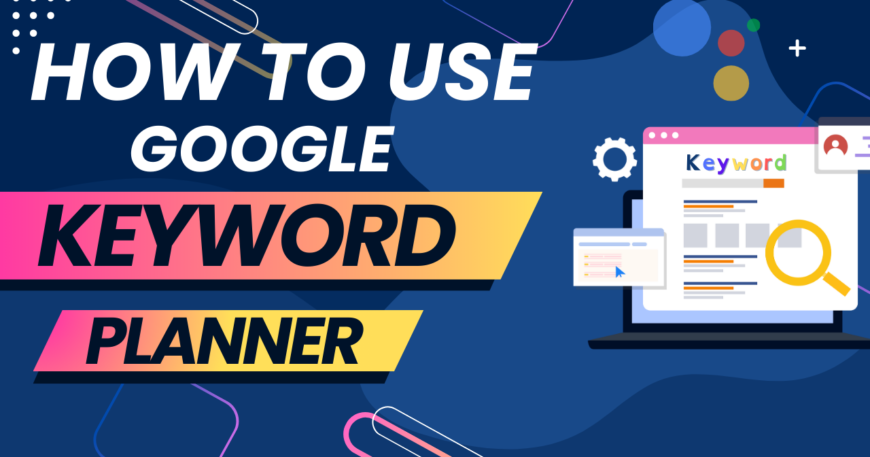
Step 1: Access Google Keyword Planner Gaining access to Google Keyword Planner (GKP) is the first step to using it for your search engine optimization (SEO) strategy. If you don’t have one, you need to set up a Google Ads account just to go about this. To set up your account, go to the Google Ads a website and follow the instructions. Once your account has been activated, go to the Google Ads dashboard’s right-hand corner and select the “Tools & Settings” tab. Next, choose “Keyword Planner” from the “Planning” menu. You don’t need to run actual ads to use the Keywords Planner, but Google may request some initial campaign setup information. This is a great tool that is free to use. The first two options you get when you login to GKP are “Discover new keywords” and “Get search volume and forecasts.” These choices open up to a variety of keyword data that can help you create a successful SEO plan. That having a structured approach to accessing and using the Google Keyword Planner will help you maximize its full potential effectively. Step 2: Choose Your Tool Once you enter Google Keyword Planner, you have two main tools available for you: “Discover new keywords” and “Get search volume and forecasts.” Each tool has a different function. “Discover new keywords” is excellent for idea generation and discussion. You can input a seed keyword or a URL that is relevant to your business, and Google will return many of related keywords and phrases. For example, if you go into “digital marketing,” it will suggest a lot of related terms. The “Get search volume and forecasts” option, on the other hand, allows you to provide a list of previously prepared terms. In relation to those specific keywords, this tool provides you with full information on search traffic, trends, and predicted futures. If you already have a list of possible keywords and would like to have more knowledge of their possible effects, this is especially helpful. You have to choose the right tool for the job, based on how far along you are in the keyword research process—whether you are just starting to collect ideas or working on your plan with specific keywords in mind. Step 3: Filter and Sort the Results Getting the most suitable terms for your SEO plan requires filtering out the results after selecting the best tool for generating a list of keywords. Several filtering options are available in Google Keyword Planner to help you reduce your list according to specific requirements. To make sure you reach the correct audience, you can narrow down by language, location, or date range. The last option allows you to target keywords that are relevant to an area. Negative keywords were terms that are unnecessary or harmful for your content strategy. You may also eliminate them. You can decide which phrases to focus on by selecting the results by metrics like typical monthly searches, competition quantity, and bid estimates. Filtering by average monthly searches, for example, can help you find high-traffic keywords. Choosing by difficulty level, on the other hand, can help you discover less competitive, easier-to-find terms. Step 4: Analyse the Keyword Ideas Section Most of your analysis can be found in the Keyword Suggestions section. This section provides an extensive list of keywords related to your seed term as well as important information like average monthly searches, degree of competition, and bid ranges of the highest-performing keywords on the page. To find keywords that can significantly increase traffic to your website, start by analyzing the search volume. These are the terms that typically receive a high number of monthly searches. Next, assess the competition level. Ranking for highly competitive keywords may be more difficult, particularly if your SEO resources are low or you have only recently started. Try to find a balance between search volume and competition; for many SEO strategies, medium- to low-competition keywords with good search volumes represent the perfect mix. You may also evaluate a keyword’s commercial worth through a look at the top-of-page bid range; bigger bids usually translate into a keyword that advertisers feel is of greater interest. Also, it is important to analyze keyword trends. Keywords that see an increase in search volume over time are typically more profitable than those that see a decline or stability in interest. By focusing on terms that have become popular, you can use this trend data to remain ahead of other businesses. Think about how these keywords fit into your writing strategy and business objectives as you study the Keyword Ideas category. Step 5: Choose a Keyword Selecting your most effective keywords to target comes after you have done a comprehensive analysis of the data. A number of elements ought to go into this decision, such as search traffic, opposition, content relevancy, and fit with the search goals of your target audience. Give the most importance to keywords that are in line with the topics of your site, have an excellent number of searches, and have reasonable competition. If a website is about fitness, for example, a keyword like “beginning workout routines” may be more useful than a term which is very popular, like “fitness.” In order to guarantee that your target audience finds information that satisfies what they want and need once they get on your website, the search terms you choose must also match what they are actually searching for. Prepare a list of keywords organized by content clusters or themes. This framework will help you organize and structure your material more successfully. Remember, the goal is to select keywords that will deliver relevant traffic to your website and help you achieve your overall SEO objectives. Bonus Step 1: Get Exact Keyword Search Volume Data While Google Keyword Planner provides a variety of search traffic parameters, higher-quality numbers may assist you improve your keyword strategy. For precise search volume data, you may need to set up an elementary Google Ads campaign. This involves creating an

How to Use Google Keyword Planner for SEO Read More »

what is seowhy is it imporant 870x457

SEO or Search Engine Optimization is a digital marketing strategy aim at improving a website visibility and ranking in search engine result page organically without relying on paid advertising. It involves a combination of technical optimization, content creation, and off-site promotion to increase a website relevance and authority in the eyes of search engines like Google, Bing, and Yahoo. Let’s delve into each aspect of SEO in detail: Keyword Research: Understanding User Intent: Analyzing the motivation behind search queries to align content with user needs and preferences. Keyword Tools and Techniques: Utilizing various tools and methods to identify relevant keywords with sufficient search volume and low competition. Long Tail Keyword: Targeting more specific and less competitive keyword phrases to attract highly targeted traffic. On-Page SEO: Title Tag Optimization: Crafting compelling and keyword-rich title tags to improve click-through rates and search engine rankings. Meta Description Optimization: Writing concise and engaging meta descriptions that accurately summarize webpage content. Heading Tags (H1, H2, etc.): Using heading tags to structure content and signal the importance of different sections to search engines. Off-Page SEO: Link Building Strategies: Acquiring high-quality backlinks from authoritative websites to improve domain authority and search engine rankings. Social Media Marketing: Leveraging social media platforms to amplify content reach, drive traffic, and enhance brand visibility. Influencer Outreach: Collaborating with influencers and industry experts to gain exposure and attract relevant audiences. Technical SEO: Website Speed Optimization: Optimizing website performance to reduce loading times and improve user experience, which can impact search engine rankings. Mobile-Friendliness: Ensuring that websites are optimized for mobile devices to accommodate the increasing number of mobile users and meet Google’s mobile-first indexing criteria. Schema Markup Implementation: Implementing structured data markup to provide search engines with additional context about webpage content, enhancing visibility in rich snippets and other SERP features. Content Optimization: Content Strategy: Developing a comprehensive content plan aligned with audience needs, keyword research insights, and business goals. Content Creation: Producing high-quality, relevant content in various formats, including articles, blog posts, videos, infographics, and podcasts. Content Marketing: Promoting content through channels like social media, email marketing, and partnerships to increase visibility, attract backlinks, and drive traffic. Local SEO: Google My Business Optimization: Optimizing Google My Business profiles with accurate business information, photos, and reviews to improve visibility in local search results and Google Maps. Local Citations and Directories: Ensuring consistent NAP (Name, Address, Phone Number) information across online directories and local business listings to establish credibility and improve local search ranking. Local Link Building: Acquiring backlinks from local websites and directories to strengthen local search authority and relevance. Advanced SEO Strategies: E-A-T and Quality Signals: Understanding Google’s emphasis on expertise, authoritativeness, and trustworthiness (E-A-T) in evaluating website quality and relevance. Voice Search Optimization: Adapting SEO strategies to accommodate the growing use of voice-activated devices and conversational search queries. Featured Snippets and Rich Results: Optimizing content to appear in featured snippets, knowledge panels, and other rich search results to enhance visibility and attract clicks. Technical SEO Specialization: Website Architecture: Designing and optimizing website structures for improved crawlability, user experience, and information hierarchy. JavaScript SEO: Addressing technical challenges associated with JavaScript frameworks to ensure proper indexing and rendering of website content. International SEO: Optimizing websites for multilingual and multinational audiences, including hreflang tags, geotargeting, and localization strategies. SEO Analytics and Performance Measurement: Key Performance Indicators (KPIs): Identifying and tracking relevant metrics such as organic traffic, keyword rankings, conversion rates, and return on investment (ROI). Google Analytics: Leveraging Google Analytics to gain insights into website traffic, user behavior, and campaign performance, and to make data-driven decisions. SEO Tools and Platforms: Utilizing a variety of SEO tools and platforms for keyword research, rank tracking, backlink analysis, technical audits, and competitive analysis. Continuous Learning and Adaptation: Staying Updated: Keeping abreast of industry trends, algorithm updates, and best practices through blogs, forums, conferences, and online courses. Experimentation and Testing: Conducting A/B tests, split tests, and experiments to evaluate the impact of SEO strategies and refine optimization tactics. Professional Development: Pursuing certifications, training programs, and advanced courses to deepen expertise and stay competitive in the field of SEO. Importance of SEO: By focusing on these subtopics and implementing effective strategies in each area, businesses and website owners can improve their search engine visibility, attract more organic traffic, and achieve their online marketing goals.Certainly! Let’s delve deeper into the importance of SEO: Enhanced Visibility and Exposure: SEO is essential for increasing a website’s visibility on search engine results pages (SERPs). When your website ranks better for relevant search queries, it is more likely to be discovered by potential consumers. Increased visibility leads to greater exposure for your brand, products, or services. Users are more likely to click on websites that appear at the top of search results, resulting in higher traffic and brand recognition. Targeted Traffic and Qualified Leads: One of the key benefits of SEO is its ability to attract targeted traffic. By optimizing your website for specific keywords related to your industry or niche, you can attract users who are actively searching for information, products, or services that you offer. Targeted traffic is more likely to convert into leads or customers because these users have already expressed interest in what you provide. As a result, SEO helps businesses generate high-quality leads and improve conversion rates. Credibility and Trustworthiness: Users tend to view websites that rank higher in search results as more reliable and credible. This is due to the fact that search engines, such as Google, assess the value and relevancy of web sites using intricate algorithms. By optimizing your website for SEO, you demonstrate to search engines that your content is valuable, authoritative, and trustworthy. This can help build credibility with both search engines and users, leading to increased trust and loyalty. Cost-Effectiveness and High ROI: Compared to traditional advertising methods such as print, radio, or television ads, SEO offers a highly cost-effective marketing solution. While paid advertising requires continuous investment to maintain visibility, SEO can provide long-term results without ongoing expenses. Furthermore, SEO has been shown to deliver a high

What is SEO and why is it important? Read More »

how to perform an seo audit for your website 870x457

Introduction: In today’s digital landscape, optimizing your website for search engines is essential for attracting organic traffic and reaching your target audience. An SEO audit is a methodical examination of the functionality and optimization efforts of your website that aids in identifying its advantages, disadvantages, and areas in need of development. This comprehensive guide will walk you through the process of conducting an SEO audit to enhance your website’s visibility and drive sustainable growth. Setting Clear Goals: Clearly defining your goals is essential before starting an SEO assessment. Think about the goals you have for your website: enhancing user experience, boosting conversions, optimizing search engine results, or increasing organic traffic.  Setting specific and measurable goals will guide your audit process and ensure you focus on areas that align with your overall business objectives. Keyword Analysis: The SEO strategy for your website is built on keyword research. Find the relevant expressions and terms that members of your target market use in their searches. Use keyword research tools like as Ahrefs, SEMrush, and Google Keyword Planner to find high-value keywords with manageable competition. Utilize keyword research tools like Google Keyword Planner, SEMrush, or Ahrefs to discover high-value keywords with reasonable competition levels. Analyze keyword search volume, relevance, and competition to prioritize your keyword targeting efforts. On-Page SEO: Optimizing individual pages of your website to increase their accessibility and relevancy to search engines is known as on-page SEO. Examine important on-page components, including headers, URL structures, meta descriptions, and title tags. Ensure each element is optimized for target keywords while maintaining readability and relevance. Additionally, focus on optimizing content quality, internal linking, and multimedia elements to enhance user experience and engagement. Content Quality: Content of the highest caliber is the foundation of every effective SEO strategy. Examine the distinctiveness, relevancy, and quality of the material on your website’s different pages and forms. Find ways to provide fresh, worthwhile material that speaks to the interests and requirements of your target market.  Consider incorporating diverse content types such as blog posts, videos, infographics, and case studies to cater to different user preferences and search intents. Site Structure and Navigation: In addition to enhancing user experience, a well-structured website makes it easier for search engines to crawl and index content. Make sure the navigation, hierarchy, and structure of your website are clear and easy to use. Identify and fix issues such as broken links, orphaned pages, and crawl errors that could hinder search engine accessibility. Optimize internal linking to establish a logical flow of information and distribute link equity effectively throughout your site. Mobile Optimization: It’s critical to optimize your website for mobile consumers due to the widespread use of mobile devices. Check the performance and responsiveness of your website across a range of screens and devices. Make sure that font sizes, interactive components, and page structure are optimized for mobile visitors to provide a flawless surfing experience. Pay attention to mobile-specific SEO factors such as page speed, usability, and mobile-friendly design to enhance your site’s visibility in mobile search results. Page Speed: One important component that affects both search engine rankings and user experience is page speed. Utilize tools such as GTmetrix or Google PageSpeed Insights to assess the loading performance of your website. To increase page speed and shorten loading times, optimize picture sizes, reduce the amount of CSS and JavaScript files, and make use of browser caching. In order to improve worldwide loading times and optimize content distribution, you should also think about putting content delivery networks (CDNs) into place. Backlink Analysis: Backlinks play a crucial role in determining your website’s authority and credibility in the eyes of search engines. Examine the backlink profile of your website to determine the quantity and quality of incoming links. Prioritize obtaining high-quality backlinks from reputable and pertinent websites within your industry. Backlinks that are harmful to your site’s reputation and search engine rankings should be disavowed. Regularly monitor your backlink profile and proactively build relationships with influencers, industry publications, and other reputable sources to earn valuable backlinks over time. Technical SEO: Technical SEO refers to a variety of technical factors that affect the search engine performance and visibility of your website. Perform a comprehensive examination of technical components, including site architecture, crawlability, indexing, and structured data markup. Address issues such as duplicate content, canonicalization errors, broken redirects, and URL parameters that could negatively impact your site’s SEO performance. Implement best practices for technical optimization to ensure your website is easily accessible, crawlable, and indexable by search engines. Analytics and Tracking: Analytics tracking is essential for monitoring your website’s performance and measuring the effectiveness of your SEO efforts. Establish up powerful analytics programs like Google Analytics and Google Search Console to monitor important performance indicators including user engagement, organic traffic, term ranks, and conversion rates. Regularly analyze data to find trends, patterns, and areas that can be optimized. Use insights from analytics to refine your SEO strategy, prioritize initiatives, and drive continuous improvement in your website’s search engine visibility and performance. Conclusion: Conducting an SEO audit is a proactive approach to optimizing your website for search engines and improving its overall performance.To boost your website’s visibility, draw in more organic visitors, and accomplish your business objectives, you may fix technical difficulties, pinpoint areas for improvement, and put into practice efficient SEO tactics by following the steps given in this tutorial. Keep in mind that SEO is a continuous process, and regular audits are necessary to sustain and improve the performance of your website over time.

How to Perform an Seo Audit for Your Website Read More »

technical seo what you need to know 870x457

Introduction: Are you looking to boost your website’s search engine visibility and performance? Technical SEO is the key! In this comprehensive guide, we’ll walk you through the essential aspects of technical SEO that you need to know. Let’s dive in! 1. Website Speed: The Need for Speed Not only is website performance crucial for user experience, but it also affects search engine rankings. Websites that load slowly irritate visitors and may have a higher bounce rate. Reduce the amount of code on your website, reduce the size of your images, and use caching strategies to improve its speed. Your website will load swiftly thanks to these modifications, which will satisfy search engines and keep users interested. 2. Mobile-Friendliness: Embrace the Mobile Revolution With the majority of internet users accessing websites on mobile devices, having a mobile-friendly website is no longer an option but a necessity. Responsive design is the key here. Ensure that your website adapts seamlessly to different screen sizes and provides a user-friendly experience across all devices. This not only improves your search engine rankings but also enhances user satisfaction. 3. Site Structure: Building a Solid Foundation A properly-structured website is important for search engines as well as users. It facilitates search engines’ comprehension of your website’s organization and content. To achieve this, focus on creating logical URL structures, implementing a clear navigation menu, and utilizing breadcrumbs. These elements not only improve user experience but also make it easier for search engine crawlers to navigate and index your website. 4. XML Sitemap: Guiding Search Engines An XML sitemap functions similarly to a search engine crawler’s road map. It lists all the pages on your website, ensuring that search engines discover and index your content efficiently. Regularly update and submit your sitemap to search engines to keep them informed about your website’s structure and content changes. 5. Robots.txt: Directing the Crawlers An essential tool for instructing search engine crawlers is the robots.txt file. It tells them which pages to visit and which not to. Verify that your robots Make sure your robots.txt file is correctly configured to prevent indexing of irrelevant or sensitive pages, ensuring that search engines focus on the most important parts of your website. 6. Canonicalization: Avoiding Duplicate Content Pitfalls Duplicate content can harm your search rankings. Canonical tags come to the rescue!When a page has many versions, using canonical tags aids search engines in determining which version is preferable. This guarantees that search engines give your information the appropriate weight and avoid penalizing you for duplicate content. 7. HTTPS and Security: Protecting Users and Rankings In today’s digital landscape, security is paramount. Switching to HTTPS (secure protocol) not only protects user data but also improves your search engine rankings. Ensure that your website has an SSL certificate and is secure, giving users and search engines the confidence they need to interact with your website. 8. Structured Data: Enhancing Search Results Structured data markup, such as Schema.org, makes your material easier for search engines to understand. By implementing structured data, you provide search engines with additional context about your website’s content, enabling them to display rich snippets in search results. Rich snippets can increase click-through rates and drive more organic traffic to your website. 9. URL Optimization: The Power of Descriptive URLs URLs play a significant role in both user experience and search engine optimization. Make use of easily comprehensible URLs that are rich in keywords and descriptive for both people and search engines. You may increase the visibility and clickability of your URLs in search results by avoiding the use of dynamic parameters and adding relevant keywords to your URLs. 10. Technical Errors: The Devil is in the Details A website’s upkeep depends on regular technical issue monitoring and correction. You can lose ground in search engine results due to crawl issues, 404 errors, server errors, and broken links. Utilize tools like Google Search Console to identify and resolve these issues promptly, ensuring that your website is error-free and search engine-friendly. Conclusion: Mastering technical SEO is essential for improving your website’s search engine visibility and performance. By optimizing website speed, embracing mobile-friendliness, creating a solid site structure, utilizing XML sitemaps and robots.txt, implementing canonicalization, ensuring HTTPS and security, leveraging structured data, optimizing URLs, and fixing technical errors, you’ll be well on your way to achieving SEO success. Remember, technical SEO works hand in hand with other optimization techniques, so make sure to implement a holistic approach to maximize your website’s potential. Happy optimizing!

Technical SEO: what you need to know Read More »

the fundamental of on page seo 870x457

As an accomplished human essayist, I’m eager to share my bits of knowledge on the fundamental components of on-page Web optimization that can assist you with lifting your site’s web search tool positioning and perceivability. In this complete aide, we’ll dig into the many-sided subtleties of on-page enhancement, enabling you with the information and methodologies to take your web-based presence higher than ever. Introduction to On-Page SEO On-page Web optimization alludes to the advancement of individual website pages to work on their perceivability and positioning in web crawler results. Dissimilar to off-page Web optimization, which centers around outer factors, for example, backlinks and social signs, on-page Search engine optimization focuses on the substance, design, and specialized parts of your site. By dominating the essentials of on-page Web optimization, you can fundamentally upgrade your site’s web crawler execution and drive more qualified traffic to your pages. Significance of On-Page SEO for website ranking In the present exceptionally serious computerized scene, on-page Website optimization has turned into a basic part of any effective web based showcasing technique. Web indexes, like Google, put areas of strength for an on the quality and significance of a site’s substance, as well as its specialized execution. By upgrading your on-page components, you can further develop your site’s web index perceivability, increment natural traffic, and eventually, drive more transformations and deals. Understanding the Different Elements of On-Page SEO On-page Search engine optimization envelops many components, each assuming a pivotal part in the general improvement of your site. These components include: Keyword Research and Optimization Optimizing Meta Tags and Meta Descriptions Creating SEO-Friendly URLs Optimizing Heading Tags and Content Structure Image Optimization for Better SEO Internal Linking Strategies for On-Page SEO Mobile Optimization and Responsive Design Monitoring and Analyzing On-Page SEO Performance Let’s dive deeper into each of these elements and explore how you can leverage them to enhance your website’s search engine performance. 1. Keyword Research and Optimization Catchphrase research is the groundwork of successful on-page Search engine optimization. It includes distinguishing the applicable terms and expressions that your interest group is looking for, and afterward decisively integrating them into your site’s substance and design. By understanding the inquiry aim and the particular catchphrases your potential clients are utilizing, you can make content that lines up with their necessities and inclinations, at last working on your site’s perceivability and positioning. To direct exhaustive watchword research, I suggest utilizing a mix of devices, like Google Catchphrase Organizer, Ahrefs, and SEMrush. These stages can give important experiences into search volume, rivalry, and related watchword open doors. Whenever you have recognized your objective watchwords, it’s pivotal to flawlessly incorporate them into your page titles, headings, content, and meta labels without compromising the normal stream and comprehensibility of your substance. 2. Optimizing Meta Tags and Meta Descriptions Meta labels and meta depictions are urgent on-page Web optimization components that assume a huge part in how your site shows up in web crawler results pages (SERPs). The meta title and meta portrayal are the primary things clients see when they experience your site in the list items, so it’s vital to create them cautiously. The meta title ought to be brief, convincing, and incorporate your objective keyword(s). The meta depiction, then again, ought to give a brief and precise outline of the page’s substance, captivating clients to navigate to your site. Guarantee that your meta labels and depictions are special, significant, and precisely mirror the substance of every individual page. 3. Creating SEO-Friendly URLs The design and configuration of your site’s URLs can fundamentally affect its website streamlining. Website design enhancement agreeable URLs ought to be spotless, brief, and incorporate significant watchwords. Abstain from utilizing long, complex, or dynamic URLs, as they can be less web search tool agreeable and less easy to understand. While making your URLs, think about utilizing a reasonable and intelligent progressive system, with each page’s URL mirroring its substance and position inside your site’s design. Moreover, guarantee that your URLs are reliable across your whole site, as this can assist with looking through motors better comprehend and file your substance. 4. Optimizing Heading Tags and Content Structure The manner in which you structure your substance and use heading labels (H1, H2, H3, and so on.) can significantly impact your site’s on-page Website design enhancement. Heading labels assist with looking through motors comprehend the progressive system and association of your substance, making it more straightforward for them to slither and record your pages. Guarantee that your H1 tag precisely mirrors the fundamental point or focal point of the page, and that your resulting heading labels (H2, H3, and so forth.) consistently structure the substance. Also, integrate your objective watchwords into your heading labels, yet keep away from catchphrase stuffing, as this can adversely influence the client experience and web index rankings. 5. Image Optimization for Better SEO Pictures assume a significant part in upgrading the client experience and visual allure of your site. Be that as it may, they can likewise influence your on-page Search engine optimization on the off chance that it is not streamlined as expected. To enhance your pictures for web indexes, think about the accompanying accepted procedures: Use descriptive and keyword-rich file names Include relevant alt text that accurately describes the image Compress image files to reduce page loading times Implement lazy loading to improve website speed Utilize responsive design to ensure images display correctly on all devices By optimizing your images, you can improve your website’s overall search engine visibility and provide a better user experience for your visitors. 6. Internal Linking Strategies for On-Page SEO Inner connecting, the act of connecting starting with one page on your site then onto the next, is a vital part of on-page Search engine optimization. Powerful interior connecting can assist with looking through motors better to figure out the design and pecking order of your site, as well as the connection between various pages. While executing inward connecting systems, center around utilizing applicable, watchword rich anchor text that

The Fundamentals of On-Page SEO Read More »

Scroll to Top