simbainstitute

Mega Dropdown Courses

Business

top digital marketing tools you should know 3 870x457

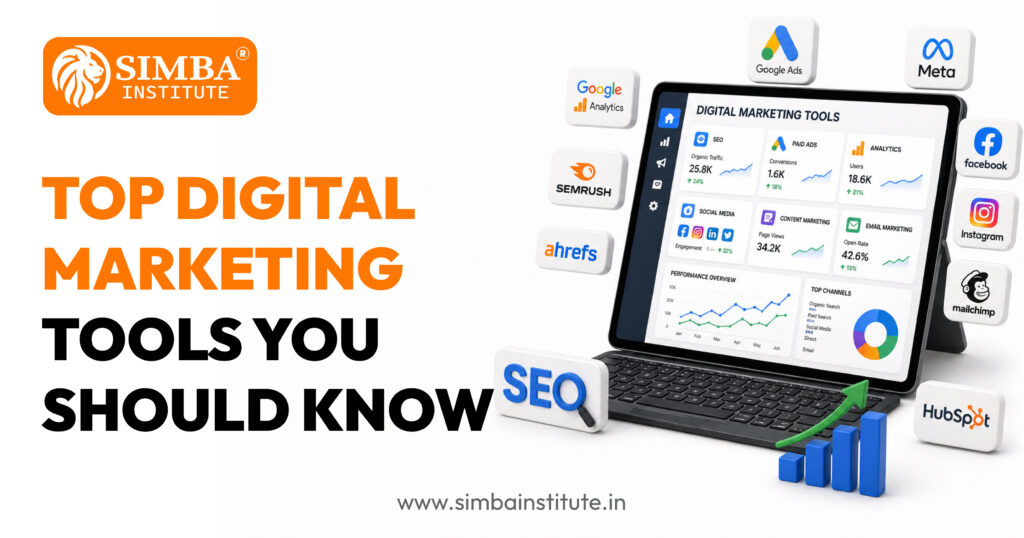
In today’s digital world, marketing tools have become critical for businesses aiming to succeed online. From managing social media to analyzing website traffic, these tools streamline processes, enhance productivity, and drive results. Here’s a curated list of essential digital marketing tools every marketer should be acquainted with: Google Analytics: Decode website traffic with insightful analytics. Hootsuite: Simplify social media management with scheduling and monitoring. Mailchimp: Master email marketing with automation and analytics. SEMrush: Dominate SEO with powerful research and optimization tools. Canva: Create captivating visuals effortlessly. In this guide, we’ll explore the following essential aspects: 1.Unravel the power of Digital Marketing Tools. 2.Why choose Digital Marketing Tools 3.Highlighting Important Marketing Tools 4.Guiding Your Tool Selection Process Understanding Digital Marketing Tools Why Choose Digital Marketing Tools? In today’s fast-paced digital landscape, businesses face a multitude of challenges in reaching their target audience effectively. This is where digital marketing tools come into play, offering a diverse range of solutions to help businesses thrive in the online sphere. First and most importantly, digital marketing tools provide businesses with the means to analyze and understand their target audience better. Through tools like Google Analytics, businesses can gain insights into their website traffic, audience demographics, and behavior patterns. This valuable data allows businesses to tailor their marketing techniques to suit the preferences and needs of their audience, ultimately improving their overall ROI. In addition to these benefits, digital marketing tools also offer scalability and flexibility, making them ideal for businesses of all sizes. no matter it’s a small startup or a large corporation, digital marketing tools can be customized to suit the specific needs and goals of any business. From budget-friendly options to enterprise-level solutions, there’s a digital marketing tool out there for every business to leverage. Why Choose Digital Marketing Tools? Digital marketing tools are like super helpers for businesses in the online world. They help us understand our customers better, like who they are and what they enjoy. With tools like Google Analytics, we can see who visits our website and what they do there. This helps us make our marketing better because we know what our customers want. Another cool thing about digital marketing tools is that they make our job simpler. We can use tools like Hootsuite to manage our social media or Mailchimp to send emails to lots of people at once. These tools save us time and energy, so we can focus on other important things. Discover the Top Digital Marketing Tools to Supercharge Your Business! In today’s fast-paced digital world, having the right tools can increase your business. From analyzing customer data to managing social media, digital marketing tools are essential for staying ahead. Let’s explore some top tools to boost your business! Google Analytics: Google Analytics is a powerful tool for tracking website traffic and user behaviour. It provides detailed insights into the number of visitors, their demographics, and their interactions with your site. Google Analytics allows you to monitor the effectiveness of your marketing campaigns and track conversions. You can analyze which pages are the most popular, how long visitors stay on your site, and where they come from. The tool offers customizable reports and real-time data, enabling you to make informed decisions to optimize your website and marketing strategies. Google Analytics is free to use and integrates seamlessly with other Google products like Google Ads for comprehensive campaign tracking. Hootsuite: Hootsuite is a popular social media management tool used by businesses and individuals. It allows users to manage multiple social media accounts from one platform. With Hootsuite, you can schedule posts in advance for platforms like Facebook, Twitter, Instagram, LinkedIn, and more. The platform offers features for monitoring social media activity, such as mentions, comments, and messages, in one dashboard. Hootsuite provides analytics and reporting tools to track the performance of your social media efforts. It also offers collaboration features, allowing team members to work together on social media campaigns and content creation. Hootsuite offers various pricing plans, including options for individuals, small businesses, and enterprise-level organizations. Mailchimp: Mailchimp is a popular email marketing platform used by businesses of all sizes. It offers features for creating, sending, and tracking email campaigns. Users can design custom email templates or choose from pre-designed layouts. Mailchimp provides tools for segmenting email lists and targeting specific audience segments. It offers automation features, allowing users to set up automated email sequences based on customer actions or triggers. Mailchimp’s analytics dashboard provides insights into email campaign performance, including open rates, click-through rates, and more. The platform integrates with various third-party apps and services, allowing for seamless workflow integration. Mailchimp offers a free plan with limited features and paid plans with additional functionality and higher email sending limits. SEMrush: SEMrush is a comprehensive digital marketing tool used for SEO (Search Engine Optimization), PPC (Pay-Per-Click), content marketing, and competitor analysis. It provides valuable insights into website traffic, keyword rankings, backlinks, and other important SEO metrics. SEMrush allows users to conduct keyword research to identify high-value keywords for their content and advertising campaigns. Users can track their website’s search engine rankings and monitor changes over time. The tool offers a competitive analysis feature, allowing users to compare their website’s performance against competitors and identify areas for improvement. SEMrush’s PPC tools help users optimize their advertising campaigns by providing insights into competitors’ ad strategies, keywords, and ad copy. It also offers content marketing tools to help users create and optimize content for better search engine visibility. SEMrush offers various subscription plans catering to different needs and budgets, ranging from individual freelancers to enterprise-level businesses. Canva: Canva is a user-friendly design tool used to create graphics, presentations, and social media posts. It offers a wide range of customizable templates suitable for various purposes such as marketing materials, infographics, and invitations. Users can easily drag and drop elements like text, images, and shapes to design their content. Canva provides access to millions of stock photos, illustrations, icons, and fonts to enhance designs. It offers collaboration features, allowing teams

Top Digital Marketing Tools You Should Know Read More »

digital marketing overview types challenges and required skills 2 870x457

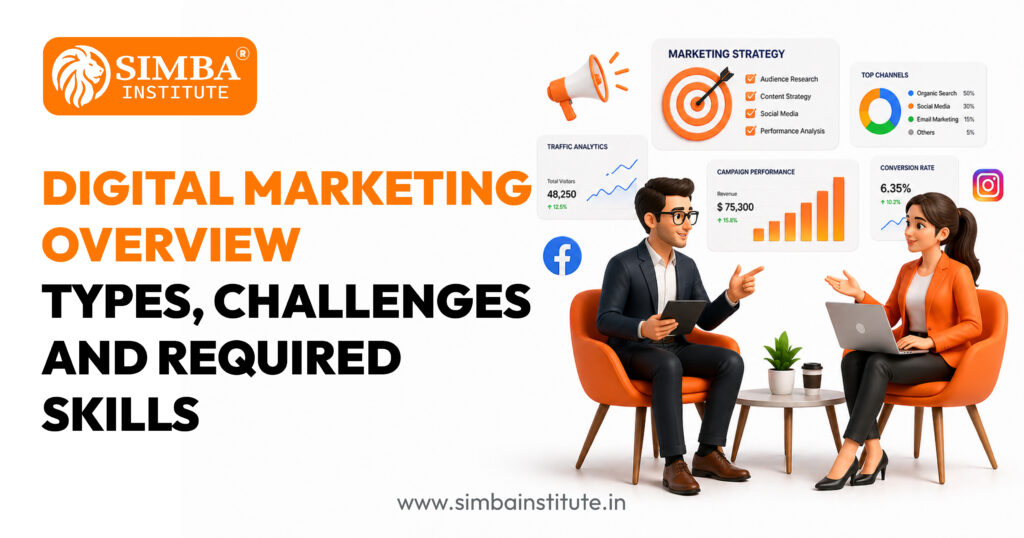
Digital marketing is important in the modern world. It’s the way businesses use the internet to inform people about their goods and services. You see Digital marketing is present on all internet platforms, including emails, social media, and websites. Because so many individuals spend so much time on social media and the internet, businesses use it. By examining data, they can also utilise it to determine what individuals like and dislike.  Businesses may reach more customers and make more sales with the aid of digital marketing. It’s constantly evolving due to the constant introduction of new concepts and technologies. Thus,  for businesses to succeed, you must constantly learn and attempt new things.  So, if you’re the kind who:     Interest in technology and its impact on communication and business.     Passion for creativity and crafting compelling messages to capture the audience’s attention.     Fascination with social media platforms and how they influence consumer behaviour.     Curiosity about how people interact and engage with content online.     Enthusiasm for entrepreneurship and finding innovative ways to promote products or services.     Desire to understand data and analytics to measure the success of marketing efforts.     Eagerness to explore diverse marketing channels and strategies to reach target audiences effectively.     Interest in staying updated with the latest trends and developments in the digital world. The role of a digital marketing specialist encompasses various responsibilities aimed at creating and implementing effective digital marketing strategies. Here are the key roles they typically fulfil: Strategy Development: Developing comprehensive digital marketing strategies aligned with business goals and target audience needs. Content Creation: Generating engaging and relevant content for various digital channels, including websites, social media, emails, blogs, and advertisements. Social Media Management: Managing social media accounts, creating content calendars, engaging with followers, and analysing social media metrics to optimise performance. Search Engine Optimization (SEO): Optimising website content and structure to improve search engine rankings and increase organic traffic. Paid Advertising: Planning, executing, and optimising paid advertising campaigns on platforms like Google Ads, Facebook Ads, and LinkedIn Ads to reach target audiences and achieve specific objectives. Email Marketing: Developing email marketing campaigns, creating compelling email content, and managing email lists to nurture leads and drive conversions. Analytics and Reporting: Monitoring key performance indicators (KPIs), analysing data from various digital marketing channels, and preparing reports to track campaign performance and make data-driven decisions. Website Management: Managing website updates, ensuring website functionality, and optimising user experience to drive conversions and achieve business objectives. Marketing Automation: Implementing marketing automation tools and workflows to streamline processes, personalise communication, and improve efficiency. Digital Advertising Campaign Management: Overseeing the planning, execution, and optimization of digital advertising campaigns across multiple platforms to maximise ROI and achieve marketing objectives. Conversion Rate Optimization (CRO): Analysing website traffic and user behaviour to identify opportunities for improving conversion rates and optimising the user journey. Stay Updated: Keeping abreast of the latest trends, technologies, and best practices in digital marketing to ensure the organisation remains competitive in the digital landscape. Overall, a digital marketing specialist plays a crucial role in driving online visibility, engagement, and conversions for businesses through the strategic use of digital marketing tactics and channels. Black side of Digital Marketing: While digital marketing offers numerous advantages for promoting your blog, it also comes with some drawbacks. One significant disadvantage is the high level of competition in the digital space. With millions of blogs vying for attention online, standing out can be challenging.  Additionally, digital marketing tactics often require continuous adaptation due to frequent algorithm changes and evolving consumer preferences, which can be time-consuming and resource-intensive. Types of digital marketing jobs: There are various types of digital marketing jobs available in today’s workforce, each focusing on different aspects of online promotion and engagement. Here are some common types of digital marketing jobs: Digital Marketing Manager: ₹600,000 – ₹1,200,000 per year. Social Media Manager: ₹400,000 – ₹800,000 per year. Content Marketer: ₹300,000 – ₹700,000 per year. SEO Specialist: ₹300,000 – ₹800,000 per year. PPC Specialist: ₹400,000 – ₹800,000 per year. Email Marketing Manager: ₹400,000 – ₹800,000 per year. Analytics Manager: ₹500,000 – ₹1,000,000 per year. Conversion Rate Optimization (CRO) Specialist: ₹500,000 – ₹900,000 per year. Digital Marketing Coordinator: ₹300,000 – ₹600,000 per year. Inbound Marketing Manager: ₹500,000 – ₹1,000,000 per year. Affiliate Marketing Manager: ₹400,000 – ₹800,000 per year. Brand Manager: ₹500,000 – ₹1,200,000 per year. How to stay up-to-date with the latest digital marketing techniques?       Follow Industry Leaders:       Attend Webinars and Conferences:       Join Online Communities       Continuous Learning       Experimentation and Analysis       Follow Industry News and Updates:       Network with Peers What is a digital marketing strategy ? A digital marketing strategy is like a blueprint for how you’ll use digital channels to achieve your business objectives. It involves setting specific goals, understanding your target audience, selecting the most effective digital channels to reach them, and continuously analysing data to optimise your approach. It’s all about leveraging the power of the internet and digital technologies to connect with potential customers and drive business growth. How to measure the success of a digital marketing campaign? Traffic: Check how many people visit your website during the campaign. Conversion Rate: See how many visitors take the action you want (like buying something or signing up). ROI: Compare the money you spent on the campaign to the money you made from it. Cost per Acquisition: Figure out how much it costs to get each new customer or lead. Click-Through Rate (CTR): Look at how many people clicked on your ads compared to how many saw them. Engagement: See how much people interact with your social media posts (likes, shares, comments). Email Metrics: Check how many people opened your emails and clicked on links inside. Customer Lifetime Value (CLV): Estimate how much money a customer will spend over time. Social Media Metrics: Look at how many followers you gained and how many people saw your posts. Brand Mentions and Sentiment: See how many

Digital Marketing Overview: Types, Challenges, and Required Skills Read More »

keyword research a beginners guide 870x457

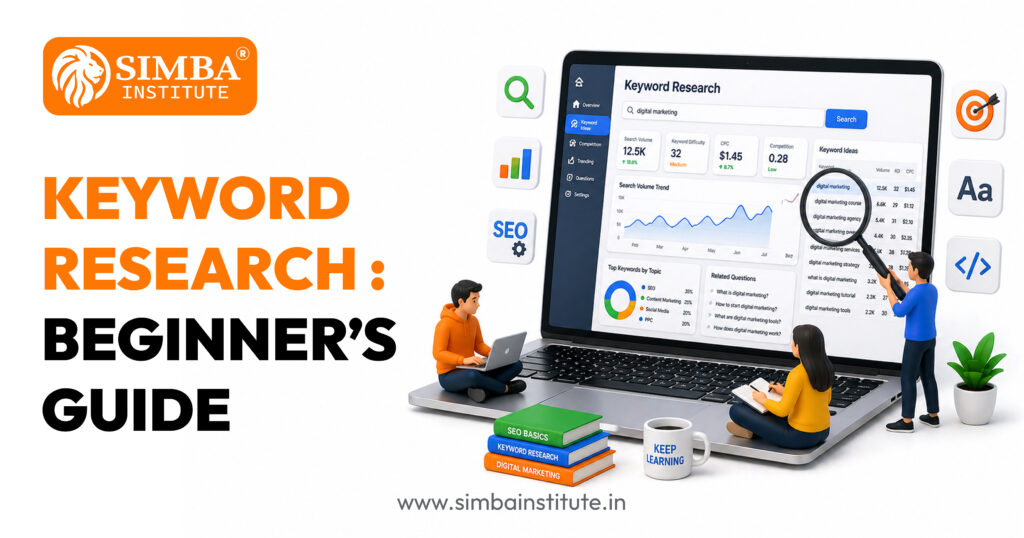
In the digital age, keyword research is a fundamental skill for anyone looking to improve their online presence. Whether you’re a blogger, a small business owner, or a digital marketer, understanding how to conduct keyword research can make a significant difference in your ability to attract and engage your target audience. This thorough guide will take you through the fundamentals of keyword research, outlining the reasons for its significance, practical methods, and best practices to guarantee your success. Why is Keyword Research Important? Visibility and Ranking  One of the primary goals of keyword research is to improve your website’s visibility on search engines. With the help of this thorough guide, you will learn the fundamentals of keyword research and understand why it’s crucial, as well as effective methods and strategies to help you succeed. Higher rankings lead to more visibility and, consequently, more traffic. Understanding User Intent Understanding your target audience’s language and search terms is made easier with the aid of keyword research.  This insight allows you to create content that resonates with them, addressing their needs and questions directly. Knowing what your users are trying to accomplish will help you create content that is valuable and relevant, which is essential for drawing in and keeping visitors. Relevance and Quality Traffic By focusing on pertinent keywords, you can increase the likelihood that visitors to your website will be intrigued by what you have to offer. The likelihood of conversions—whether they be buying something, subscribing to your newsletter, or interacting with your content—is increased by this relevance. Competitive Analysis     Researching keywords also reveals tactics used by your rivals. You can find openings and gaps in your niche by looking at the keywords that your rivals are focusing on. This competitive intelligence helps you to differentiate your content and offer unique value to your audience. Steps to Conduct Keyword Research Identify Your Niche and Goals Establish your target market and comprehend your company’s goals first. What are your main objectives?  Are you looking to increase traffic, generate leads, or boost sales? Clearly defining your goals will guide your keyword research process. Brainstorm Seed Keywords Seed keywords are general terms associated with your specialty. Start by using broad terms that characterize your company, goods, or services. For instance, if you run a fitness blog, seed keywords might include “exercise routines,” “healthy diet,” or “weight loss tips.” Use tools like Google Autocomplete to expand your list of seed keywords. Use Keyword Research Tools     There are several tools available to help you expand and refine your keyword list. Some popular options include: Google Keyword Planner: A free tool that estimates search volume and assists in finding new keywords. SEMrush: An all-inclusive tool that provides competitor insights, keyword analysis, and other features. Ahrefs: renowned for its powerful keyword research and backlink analysis tools. Ubersuggest: A user-friendly tool that provides keyword suggestions, search volume, and competition analysis. Analyze Search Volume and Competition   Evaluate the search volume of each keyword to understand its popularity. While a high search volume suggests strong interest, it also frequently means fierce competition. Determine how difficult it would be to rank for each keyword by analyzing the level of competition. Tools like SEMrush and Ahrefs provide keyword difficulty scores to help you with this analysis. Understand Search Intent     Classify keywords based on user intent: The purpose of users’ searches is informational (e.g., “how to start a blog”). Navigational Intent: Users are trying to locate a particular page or website (like “Facebook login”). Users with transactional intent are those who want to buy something (e.g., “buy running shoes online”). Commercial Investigation: Users are researching products or services before making a decision (e.g., “best laptop for gaming”). 6.Explore Long-Tail Keywords Long-tail keywords are more focused phrases with three or more words (e.g., “best home gym equipment for small spaces”) and are good targets for niche audiences because they are less competitive and have higher conversion rates. 7.Conduct Competitor Analysis     Determine who your primary rivals are and research the keywords they are ranking for. Use resources like Ahrefs or SEMrush to compile this information. Examine any holes or chances that they might have overlooked, and use the information to improve your keyword strategy. 8.Organize and Prioritize Keywords     Sort your keywords according to their intent and relevance into themes or clusters. Sort them according to search volume, competition, and fit with your company objectives. Pay attention to keywords that combine low to medium competition with a high search volume. 9.Create and Optimize Content     Create excellent content that speaks to the intent of the user behind the keywords you have chosen. Use focused keywords to enhance your content in important places like headings, titles, body text, and meta descriptions. Make sure your keyword usage improves the user experience and is natural. 10.Monitor and Refine     Monitor your keywords’ performance on a regular basis with Google Analytics and Google Search Console. Examine your user engagement, traffic patterns, and rankings. Make adjustments to your keyword strategy by adding new keywords, improving your current content, and looking into new opportunities in light of this data. Best Practices for Keyword Research Steer clear of keyword stuffing: Instead of stuffing keywords into your writing in an awkward way, concentrate on producing meaningful, high-quality content. Remain Relevant: Update your keyword research on a regular basis to account for shifts in search engine algorithms, industry trends, and user behavior. Think Local When Relevant: Incorporate local keywords into your strategy if your company operates locally. Optimize for Voice Search: To capture voice search queries, use conversational, natural language in your questions and phrases. Leverage Multiple Tools: To obtain thorough information and insights, combine various keyword research tools. Conclusion Keyword research is an essential part of any successful SEO strategy.You may create a strong keyword strategy that improves your website’s visibility, draws in the right audience, and generates meaningful engagement and conversions by following the instructions in this guide and following best practices. Remember, keyword research is not a one-time task but an ongoing process that

keyword research: a beginner’s guide Read More »

future of it industry in india. how it can beat silicon valley 870x457

In the past, India has frequently appeared to be among the emerging nations’ relative laggards, particularly in terms of economic growth. However, what changed that was the IT revolution in the country that led to the Indian software industry being recognized as one of the most successful in the world today. The outsourcing of software to technical software companies donated to the IT industry’s rise in the late 1970s. It was quick and simple, and in the uncharted territory of technology, it was practical. Due to the extreme lack of skilled engineers who could make original software, the early 1980s were all about “prepackaged” software. But in the 1990s, project-driven software services made a comeback, which ignited the sector’s exponential, high growth rates in India.a Soon the local industry established itself, and multinationals began to set up their development centres in the country, starting with Texas instruments in 1986. The rest is truly history! With numerous stages of growth and development over the past three decades, the Indian IT industry has been rising at an astounding rate since the early 1990s. One of the biggest digital centres in the globe today is India. It frequently uses phrases like “digital technology,” “Artificial Intelligence,” “Cloud Computing,” etc. Growth of the IT Industry in India The knowledge economy of the twenty-first century depends heavily on the information technology (IT) sector. India has been classified as a knowledge economy globally due to its great IT sector. The IT sector consists of hardware, software, e-commerce (online business), IT course services, and IT-enabled services (ITES). The infrastructure needed to store, process, and exchange information for vital company functions and other organisations are also developed in part by this industry. Any corporate firm’s expansion and success now depend on IT-based services and solutions. This industry not only has tremendous potential for accelerating growth and economic development but also has a visible impact on improving the productivity of virtually every other sector of the economy. India’s IT sector is growing at a rate unmatched by any other economy in the world. Over the past two decades, all sub-sectors of this industry—hardware products that have had less success—have made leaps in revenue development, supporting the growth of the Indian economy. The Government of India’s liberalisation initiatives, such as lowering trade barriers and eliminating import levies on technology products, as well as the rapid growth of the IT industry, have all aided in the creation of this enterprise. The domination of this sector in the global IT industry has also been aided by other government measures, including the creation of Software Technology Parks (STP), Export Oriented Units of foreign direct investment (FDI), special economic zones (SEZ), and EOU (FDI). These key technological forecasts demonstrate that India’s IT sector is its future. Cloud Computing Almost every industry, including teaching, SMB, healthcare, and the public sector, is looking to move to shadow computing. Finance, accounting, supply chain, logistics, and IT management have been the areas of the cloud that have experienced the most widespread use in recent years. While digital transformation is recognized as indispensable for the growth of the country. The use of cloud services is widespread on the Internet and is expanding quickly to fill entire environments. Due to its promising security characteristics, it is becoming a top priority for safeguarding data and application infrastructure. Thus, it demonstrates that India’s future lies in the IT sector. Internet Of Things (IoT) A recent survey conducted showed that over 86% of the respondents plan to increase their IoT spending significantly over the next couple of years. To digitally upgrade their business models, US companies spent an average of $4.6 million on IoT in 2018, according to the poll. Sensors will be incorporated into nearly everything during the next 20 years, including machinery, equipment, heating systems, security systems, and pretty much everything else. The Internet of Items will be crucial to this action. Artificial Intelligence & Robotics Although artificial intelligence as a concept has been present for well over 60 years, it has just recently become more popular. AI’s special capacity to transform corporate strategy is made possible by passive operational power and storage. AI is expected to take over, and it will: self-driving cars, robotics, cutting-edge teaching methods, and even personalised medicines. Intelligent Automation Intelligent automation, which combines automation and AI, is starting to change how business is done in practically every sector of the economy. It may automate entire processes or workflows, detecting and synthesising a massive volume of information while learning and adjusting instantly. Retail, BFSI, and CPG industries are principally responsible for driving global investment in intelligent automation systems (Consumer Packaged Goods). In the upcoming years, it is anticipated that India’s IT sector will invest a significant amount of money in initiatives for efficient automation and AI. Once more, it asserts that India’s future lies in the IT sector. Blockchain Numerous countries have recognized the enormous potential of blockchain in their economies, and it has sparked considerable interest across industries. India saw a substantial rise in the adoption of this disruptive technology in 2016. Consequently, it has been tested in a range of use cases by various banks and corporate juggernauts. The most typical application of Blockchain is Bitcoin. It has been carefully chosen in the nation, where there are numerous Bitcoin exchanges and wallets dispersed. India’s BFSI is leading the adoption since the government is the most significant driver and facilitator of blockchain technology. In Cybersecurity, the top job opportunities to be available in the Future of the IT Industry in India, are- Security Analyst: Security Analysts are in charge of finding and fixing weaknesses in a company’s computer networks and systems. They could take part in tasks including checking security logs, conducting security assessments, and suggesting security improvements. Security Engineer: Security engineers design and build security systems for businesses. They might be involved in activities including creating security protocols, putting security technologies into use, and evaluating the efficiency of security measures. technologies, as well as evaluating the efficiency

Future of IT Industry In India. How It Can Beat Silicon Valley? Read More »

build a career in digital marketing 870x457

Digital marketing career ‘s are in high need right now. The industry not only provides a variety of creative options, but it is also continually branching out into new technological fields and industries. Due to these circumstances, the industry now requires workers with a variety of skill sets, personality traits, and professional histories. Standing in 2023, the situation appears to be very different. Digital marketing is not anymore a luxury or a ‘nice to have’ option but is a mandate for businesses that want to keep up with the competition. With the evolution of technologies, digitization, and rapidly changing market dynamics, digital marketing is the only way forward to reach its audiences. What is Digital Marketing? Digital marketing is a type of advertising in which companies use online channels including social media, email, blogs, and digital advertising to market their goods and services. Building a digital presence and creating audience-specific ads are both parts of the process. The practice of advertising goods and services to clients by way of various digital platforms is what’s meant by the term “digital marketing.” Websites, mobile devices, social media, search engines, and other online channels are just some examples of the types of marketing that fall beneath this category. The proliferation of the internet in the 1990s led to the rise in the popularity of digital marketing. While digital marketing is commonly seen as an innovative approach for organisations to communicate with customers and gain insight into their behaviours, traditional marketing, and digital marketing share many of the same basics. In their strategies, organisations usually use both conventional and digital marketing techniques. Numerous colleges have begun offering Digital Marketing Courses in India as a result of the rising demand in the field of digital marketing. I’ve seen lots of different entry points into digital marketing careers, from the traditional to unique career bendingly unique! If you’re looking to start a profession in digital marketing, give yourself an advantage by exploring the issues raised below: Higher education Online personal development/training Create your opportunity Higher Education Let’s talk about ‘conventional routes.’ In 2020, for the first time, I saw 28 UK universities offering BA Hons degrees in digital marketing. It’s good to see education providers introducing digital marketing, firmly establishing it as a more formally recognized career path. I do not doubt that this degree option will become much more popular. I had already noticed an unmistakable trend of how traditional degrees easily led to a variety of digital marketing positions before these degrees in digital marketing were created. There are several that are obvious, such as Media Studies, Marketing, Journalism, and Computer Science. However, degrees in other subjects, such as English, Math, Economics, and Psychology, can also be a good starting point for technical or artistic positions in digital marketing. Online Personal Development Higher education is all well and fine but not everyone has the chance to go to university. As I mentioned, nearly half of Rand Fishkin’s surveyed marketers don’t hold phases. So how have they got their knowledge? Mostly from hands-on practice, but there is also an abundance of training courses online, from generalist to specialist skill sets. In the globe of digital marketing, everything you must learn is available online. Just ask google. At the time of writing Google’s Academy certifications which include Google Analytics, Google Ads, Google Tag Manager and more are all free. In addition, for beginners, you’ve got Google’s Digital Garage which covers a wide scope of topics from the basic through to mid-level. There’s also Google Squared Online which is a well-respected certificate. There’s a cost for this one, but it can be employer or self-funded. As you move through the industry, there are many conferences (online and in real life pre-COVID-19 of course!), webinars, slack channels, and groups to belong to. Some of the industry tools have set up academies, including SEMrush Academy which offers courses covering different skills of Digital Marketers in their research section (all content is free, and can be uploaded without registration). If you’re struggling to understand where to start your personal development, Hardik, Founder of Simba Institute SEO suggest working out what you enjoy doing the most and what would you like to grow your skills in. Is it technical? Is it content? Is it social? Is it digital PR? Create Your Opportunity Coming back to the concept of a non-degree holder excelling in a technical marketing trade: we know there is a wealth of successful digital marketers who spent their boyhoods tinkering with computers, coding, and construction websites. They’re naturally like sponges, soaking up their learning from their peers, reading a lot, and trying something out online. They’re produced in their work by their effects, exploring the digital marketing landscape with self-driven education. There are many different ways of doing this. You’ll hear people lecturing about ‘getting your hands messy’. In this context, it’s all very well having the idea. But an employer enjoys seeing that you’ve put all that thought and enthusiasm into practice. Your career in digital marketing in these Three steps: 1.Learn the fundamentals of digital marketing. For beginners to digital marketing, the first apparent step is to comprehend what is digital marketing and the major components that make up digital marketing. Digital marketing or online marketing as it is occasionally known is a broad term that is used to explain the process of marketing on the Internet. It has some components that cover all areas of online promotion. You need to understand that it’s not a single discipline but it has some processes (channels) that can participate in a digital marketing campaign. 2.To concentrate on, pick one digital marketing channel. There are a lot of digital marketing channels. The book Traction details 19 of them, including: Search Engine Optimization (SEO) Content marketing Email marketing Social and display ads Since you’re driving your website alone, it would be unthinkable in terms of time, effort, and resources to manage every marketing medium. Instead, we recommend focusing on just one place of digital marketing. But which channel should

How To Build A Digital Marketing Career Instead Of A Job? Read More »

5 it courses 870x457

IT careers and the information revolution are changing rapidly, and there’s no better time to get in on the action. If you’re interested in pursuing a career in IT, there’s no better time than now. But where do you start? There are so many different types of jobs in this industry that it can be hard to know where to start looking for one that’s right for you. Luckily, there are lots of resources available online—from websites like CareerBuilder and Indeed to organizations like the Society for Women Engineers (SWE). And if you’re wondering what kinds of careers are out there and what they pay, we’ve got some answers for you! If you’re interested in pursuing a career in IT, there’s no better time than now. But where do you start? There are so many different types of jobs in this industry that it can be hard to know where to start looking for one that’s right for you. But how can you find an IT job that will pay well enough for you to live comfortably and provide for your family? To help you answer this question, we’ve compiled a list of the top 5 IT courses that will make you stand out from other candidates—and get you hired! 5 IT Courses That Gives You Highest Salary 1. Data Scientist Data science is a relatively new concept but it has seen rapid growth. Data scientists are required to work on various projects that help companies improve their business processes. A data scientist has to have the knowledge of statistics, machine learning and programming languages such as Python, R and SAS. It is estimated that there will be a shortage of 1.5 million data scientists by 2020 across the world. The demand for data science professionals has been increasing over the years with major companies like Google, Apple, Facebook and Amazon hiring them in large numbers. Average Salary of the Data Scientist in India: The average salary of a data scientist in India is around 3.2 lakhs per annum (Rs 320000). To become a data scientist you need to enhance the following skills: Mathematical Skills Data Visualization Technique Programming Languages Machine Learning 2. Full Stack Developer The full-stack developer is a person who is capable of handling all the aspects of software development, including design and implementation. The full-stack Developer can develop both frontend and backend applications using various programming languages like Java, Python, JavaScript, C# etc. Full stack developers have the most in-demand skills in the tech world today. They’re able to take an idea from concept to completion, including everything from user interface design to back-end programming and more The growth rate of full stack developers is expected to grow by 18% between now and 2024, which makes them one of the fastest growing positions in IT right now. As more companies begin adopting cloud computing solutions, there will be an increased demand for full stack developers who can manage these systems. Average Salary of Full Stack Developers in India: Average salary of full stack developer in India is Rs 2.5 lakh per month (as per 2022 research). To become a data scientist you need to enhance the following skills: HTML and CSS JavaScript Frameworks Backend Programming Languages Web Architecture Git and GitHub Database Management Systems, etc. 3. Digital Marketing Specialist Digital marketer is one of the most popular jobs in India. The digital marketer is responsible for the marketing of a company’s products or services through an online medium. Digital marketers must have a thorough understanding of how to use various social media platforms like Facebook, Twitter, YouTube etc. There is a huge demand for digital marketers in India as well. The growth of digital marketing course industry in India is increasing day by day and it is expected that there will be a high demand for Digital Marketer in 2023. Digital Marketer Salary in India: The average salary of the Digital Marketer in India is Rs 30 lakhs per year. The salary ranges from Rs 1,50,000-5,00,000 per month. To become a digital marketer you need to enhance the following skills: Content Marketing Data Analysis Search Engine Marketing Social media marketing 4. Artificial Intelligence Engineer An AI engineer is a computer scientist who designs, builds, and tests software that can learn from data. They may work in the field of machine learning or data science. The AI engineer’s job is to create algorithms that enable computers to make decisions using artificial intelligence. The growth of AI in India has been rapid over the last few years due to the country’s high-tech sector and large population of young people with access to education. The AI industry in India is expected to grow by over 30% every year through 2022. The average annual salary for an AI engineer in India is Rs 3,65,000 – 4,00,000 per year (USD $55,622 – $61,000). To become a artificial intelligence engineer, you need to enhance the following skills: HTML and CSS JavaScript Git and GitHub Backend languages Web architecture HTTP and REST Database storage 5. Data Analytics Data Analytics is one of the most popular courses in India. In fact, it was ranked as the best course to pursue by The Economic Times. Data Analytics is a branch of computer science that uses data to discover patterns and make predictions. This can be done using data from any industry or field, including business, health care, and social sciences. Data Analytics is very much in demand in India. The demand for data scientists is expected to grow by over 30% over the next 5 years. Data analytics professionals are paid well; their average income was Rs 4.5 lakh per year (roughly $7,000) in 2022. The skills required to be a Data Analyst are: 1) SQL (Structured Query Language) – A query language used to retrieve information from databases 2) R – An open source programming language and software environment for statistical computing and graphics 3) Python – A general purpose programming language that can be used for many types of applications including web development and data science projects Conclusion: The IT courses mentioned above can surely guide

5 IT Courses To Get You A High Paying Job In 2024 Read More »

future of it industry in india 870x457

Introduction The IT industry in India is one of the fastest growing industries and has been making waves in terms of further growth. It has been predicted that the Indian IT industry will grow at an annual rate of 12% per annum over the next few years. This will mean that more and more people can join this industry as it is a rapidly expanding one which hasn’t seen any major obstacles yet. What is the future of the IT industry in India? The IT industry in India is one of the fastest growing economies in the world. It contributes over USD 150 billion to India’s GDP and employs over four million people. The IT sector has been experiencing exponential growth since its inception in 1981. The demand for skilled workers has increased exponentially, which has led to higher salaries, better working conditions and more job opportunities for fresh graduates as well as experienced professionals alike. The IT industry in India is one of the fastest growing economies in the world. It contributes over USD 150 billion to India’s GDP and employs over four million people. The IT sector has been experiencing exponential growth since its inception in 1981. How the IT sector has emerged as a pillar of modern India The IT sector has emerged as a pillar of modern India. The country has a large pool of talent and is home to some of the world’s most dynamic companies, including Infosys, TCS, Wipro and Cognizant. In fact, India accounts for 40 percent of global IT services exports with its contribution to GDP growing from $5 billion in 2000-01 to $150 billion in 2016-17. The IT industry is also one of the largest employers in India; there are more than 3 million people working directly or indirectly on this front with over 1 million being added every year (Source: Nasscom). Indian IT companies are at the forefront of digital transformation, leveraging new technologies like cloud computing, artificial intelligence (AI) and machine learning to change the way businesses operate. They have also made significant investments in innovation centers that focus on developing solutions for clients around the world. The importance of IT to India Economy The IT industry is the largest employer in India, with an estimated 1.8 million employees. It contributes 10% to the GDP of India and is considered one of the most important sectors of our economy. The industry is also growing at a rapid pace, with an annual growth rate ranging between 8% and 10%. The Indian IT industry is expected to continue its rapid growth for the next few years. The industry is also expected to face some challenges in the future, such as an increase in competition from other countries and a shortage of skilled workers. The Indian IT industry is the largest employer in India, with an estimated 1.8 million employees. It contributes 10% to the GDP of India and is considered one of the most important sectors of our economy. The industry is also growing at a rapid pace, with an annual growth rate ranging between 8% and 10%. The Indian IT industry is expected to continue its rapid growth for the next few years. Where is India in this everlasting IT race? India is a rising star in the global IT industry. The country has emerged as a key player in the global IT market, and it’s one of the fastest growing economies in the world. India is also home to some of the most innovative companies in this space–and that’s not surprising when you consider how much money they’ve invested into research and development over time. According to some estimates, India spends more on R&D than any other country except China or Japan (depending on who you ask). And that investment shows: India has been able to produce some truly cutting-edge innovations over time! The country has also become a major hub for IT companies. A number of large firms have set up their operations in India, which has helped to boost the local economy and create jobs for thousands of people. India is also home to some of the world’s most innovative companies in this space. What are the prospects for the IT budget in India 2023? The IT industry is growing at an exponential rate, and it’s expected that the IT budget will be increased by 20% in the next 5 years. This will result in an increase in job opportunities, as well as an exponential growth of this sector. The IT industry is growing at an exponential rate, and it’s expected that the IT budget will be increased by 20% in the next 5 years. This will result in an increase in job opportunities, as well as an exponential growth of this sector. The IT industry is growing at an exponential rate, and it’s expected that the IT budget will be increased by 20% in the next 5 years. This will result in an increase in job opportunities, as well as an exponential growth of this sector How the IT industry is boosting Indias growth What can we expect in the next 20 years? The IT industry has been a major contributor to India’s growth, helping shape its economy and contributing to its development. The future of this sector looks very bright, with many experts predicting that it will continue to grow in strength over the next 20 years. The IT industry in India has come a long way from its humble beginnings and is now one of the largest in the world. The sector contributes 7.5% of India’s GDP and employs over 3 million people. The IT industry in India has come a long way from its humble beginnings and is now one of the largest in the world. The sector contributes 7.5% of India’s GDP and employs over 3 million people. The future of this sector looks very bright, with many experts predicting that it will continue to grow in strength over the next 20 years. The

What is the Future of the IT Industry in India? Read More »

facebook poll ads best practices ad specs to get started 870x457

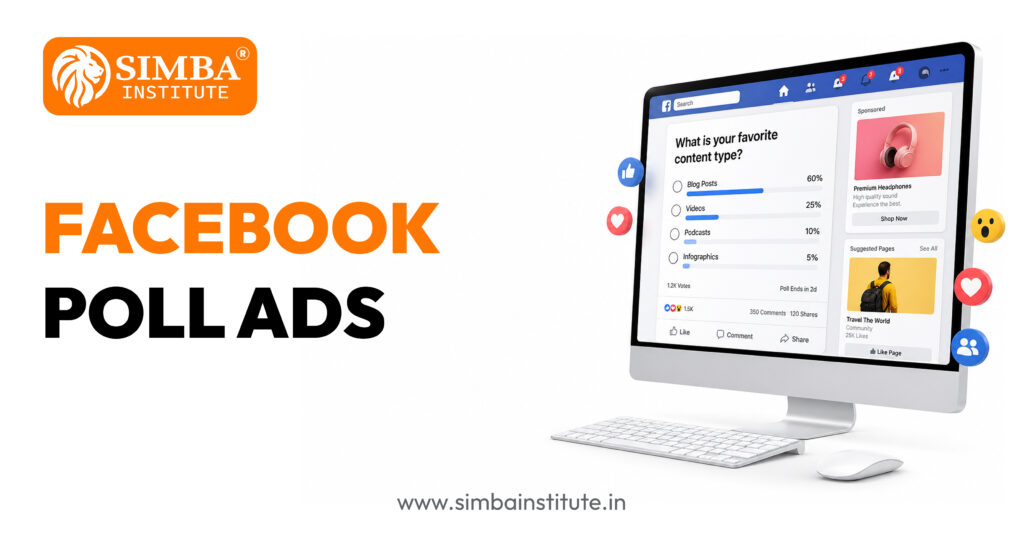
Engaged social media users frequently wish to have a bigger impact overall. They demand a say in important decisions that brands make. As a result, brands enable both of these. Digital advertising on social media is changing from one-way communication to a constant conversation between brands and customers thanks to GIFs, lives, reactions, emoticons, facial filters, augmented reality, and playable commercials. By including the polling sticker to Stories advertising in March 2019, Instagram enabled businesses to start interacting with customers more closely: The new Instagram Stories ad type is currently in open beta. increased average video views by 3 seconds lowered the cost per video view by 20%. increased app installations by 40% Following the popularity and success of the brand-new interactive ad from Instagram, Facebook Ads made the decision to add polling functionality to their platform. Here come the Facebook Poll ads. What are Facebook Poll Ads? In a video ad campaign, poll ads incorporate a question and several possible answers, allowing viewers to participate in an interactive experience and voice their opinions. In the Facebook mobile News Feed, the following new ad format appears: How and why to use Facebook Poll ads Brands may use Facebook Poll advertisements to:  Discover which goods, services, or content will appeal to their audience the most. gather data to create new products or services or to enhance existing ones. Make sure they have a market based on the desires, requirements, and problems of customers. Develop stronger, more likeable connections Increased engagement, interaction, brand awareness, and conversions are generated by Facebook video poll ads. Delivering content that consumers want leads to increased engagement, and the more interaction a user has with a brand, the more probable it is that they will remember it and make a purchase. In fact, five out of nine brand lift studies conducted during beta testing found that poll advertising raised brand awareness more so than conventional video ads. The adoption of the new format by E! Entertainment is explained by Eric Eckstein, Senior Director of Digital Marketing at E! Entertainment: E! is always looking for more meaningful ways to engage its audience. Prior to the release of Season 4 of Total Bellas, the introduction of Facebook Poll advertisements provided us with an amazing opportunity to employ media in a creative and interactive way. Giving viewers a chance to connect with the show enabled us to develop significant interactions that fueled success throughout the Season. Ad specs Poll advertisements adhere to regular mobile video ad specifications because they are mobile video ads with polls included. Design Recommendations The majority of file types are supported, but it is advised to use H.264 compression, square pixels, fixed frame rates, progressive scan, and stereo AAC audio at 128kbps+. 9:16 to 16:9 in the video Resolution suggested: Upload a video with the greatest resolution that is feasible while staying under the allowed file size and aspect ratio constraints. 4GB for the video file Max Captions: Not required but advised Sound is optional but advised. 125 characters total Deliveries of video thumbnail pictures with more text than 20% may be lowered Videos that are vertical and have an aspect ratio taller than 4:5 can be changed to 4:5. Headline for link: 25 characters 30 character limit for link description Objectives: Brand Awareness Reach Traffic App Installs Conversions Technical Requirements Video duration: 1 second to 241 minutes Video dimension: At least 120 pixels by 120 pixels Video size: 1MB to 26GB Video aspect ratio: 100×400 to 400×100 Best practices for video poll ads In addition to several guidelines particular to polls, poll commercials also adhere to many of the general best practises for mobile video ads: Keep videos short If your video advertisement is 15 seconds or fewer, viewers are more likely to stick around to the conclusion. Instagram Stories and Facebook in-stream placements are also available for video ads that are 15 seconds or less long. Capture attention quickly To capture and hold viewers’ attention, the most intriguing section of your video should appear inside the first three seconds. Feature your product or brand message early In order to raise brand awareness, you need quickly demonstrate your brand identity, just as you want to grab attention quickly: Use vertical or square video Choose a vertical or square aspect ratio to maximise the amount of screen real estate since most people hold their phones vertically. Design for sound off Use text, graphics, and captions whenever you can because many people watch videos without sound. Keep polls short Shorter poll questions typically perform better since they encourage user participation without taking away too much attention from the video. Make polls meaningful Ask meaningful questions rather than ones that only have “Yes” or “No” replies. Make your inquiry more interesting by using words like “Yes, without a doubt!” or “Absolutely no way.” if you want a yes/no response: Avoid trivia questions Trivia-style questions typically draw less participation. Do not “bait” users Baiting users to “like” or “react” to your content Comment-baiting is the practise of soliciting responses in comments. Asking individuals to share the post with their friends is known as “share baiting.” Tag baiting is the practise of requesting friends’ tags. Vote baiting is the practise of enticing individuals to cast ballots by leveraging their reactions, comments, shares, or other ways. Direct traffic to a post-click page Although adding URLs for each selection is optional, it’s best practise to direct users to another page after they vote: Send traffic to certain post-click landing pages because that is where conversions take place for the best outcomes. How to set up poll ads To add a poll to your video ad: Click Create when you are in Ads Manager. Select (Brand Awareness, Reach, Traffic, App Installs, or Conversions) an objective that supports Poll Ads, then click Continue. Click Continue after selecting your targeting, placements, and budget. Select a video from the media library or upload a new one under Format. To add a poll, click on it. Enter your poll

Facebook Poll Ads: Best Practices & Ad Specs to Get Started Read More »

Scroll to Top