
simbainstitute

Mega Dropdown Courses

Blog

8 tips to increase your organic reach on social media

It might be incredibly difficult to increase your social media organic reach. There is intense competition between various brands and businesses on social media platforms. Additionally, each platform employs a unique algorithm to function. While sponsored and paid content is a surefire approach to reach your target audience, you still need to have a solid social media strategy for the purpose. It’s a fact that paid advertisements are expensive, and not all companies can afford to employ them frequently. You can maximise the reach of your business on social media with the appropriate blend of paid and organic content. Organic methods make it challenging but not impossible to attain the required outcomes. With the correct social media tactics, several brands have successfully achieved their objectives organically. The eight best techniques to increase your social media reach organically are discussed in this blog. 1. Choose the right platforms to market your brand Brands and businesses can now be found on a variety of social media platforms. The first step to achieving the desired social media reach is selecting the appropriate platform. Additionally, not every social media site needs to have a profile. Every social media platform has a set of guidelines known as an algorithm that controls how content is presented to you in your newsfeed. You must comprehend how each social media platform’s algorithm functions if you want to increase your organic reach on those platforms. After all, the algorithm will control how the material appears in the feeds of your audience. As a result, choose your marketing channels wisely. 2. Right audience selection Engaging with your audience on social media is necessary to increase your organic reach. But first, the right target market must be selected. The amount of audience engagement you get on social media is a typical component that influences the algorithm on those platforms. The more often you interact, the wider your organic reach will get, but only if you pick your audience carefully. Be sure to reply to any and all comments, criticisms, and praise you may get on your social media profiles. The effect will be that you can improve your feed rating. Brands frequently are unable to expand their organic social media reach due to inadequate audience selection. Utilize social media analytics software to learn more about your audience and implement your strategies accordingly. 3. Encourage user-generated content User-generated content UGC serves the same purpose as peer reviews for your brand. The more people share your material, the greater your chances are of expanding your organic reach. You can start campaigns using hashtags. For your brand, develop a fresh hashtag. Then you can request that your audience post material that features your company or its goods. It is crucial to include the marketing hashtag in the captions as well.Set up  campaigns with incentives, where you can offer rewards for content showcasing your company or its products or simply showcase their content in your feed. Your brand’s social media reach will grow as a result. Starbucks deserves praise for their exceptional user-generated content engagement and reach. One of the Instagram user-submitted posts that Starbucks posted is this one. 4. Conduct live streaming sessions Live-streaming material could be quite helpful for boosting social media’s natural reach. Live videos are an excellent way to promote in-the-moment conversation. Because live videos are interactive, brand engagement greatly increases. The greater the engagement, the more views your content will acquire. Engaging live broadcasts that compel your audience to comment and respond are the key to mastering your social media organic approach.Benefit Cosmetics’ Facebook Live video feed had about 31k views. This is just one example of the many ways that different brands have used live streams to broaden their audience and enhance engagement. 5. Post less but meaningful content The quality of your material should take precedence over the quantity of posts you make on social media if you want to increase your organic reach on those platforms. Focus on producing material that enhances interactions between your audience members. It won’t work to post too frequently only to get your material on consumers’ news feeds. The majority of algorithms favor user-engaging content. Instead than wasting time and money on multiple social media updates, focus on improving the quality of your content. 6. Monitor your content performance with analytics tools Use a social media analytics platform like Unbox Social to gain important insights and information about your content. You can keep an eye on your social media engagement and reach with the help of this tool.With the use of the tool, you can keep tabs on all the important data including reach, impressions, follower growth, and engagement rate. Which content postings drew the most attention and interaction? Which ones failed? In relation to the consistency of your content, have you seen any patterns? You may get crucial information about your social media activities using our social media analytics tool. Look at your most read blog posts to find out which parts of your material people appreciated. You might employ a similar strategy for your next content posts. You can get detailed audience analysis data from Unbox Social in addition to the metrics mentioned above. 7. Focus on the type of content you post Social media platforms support many types of material, but not all of them will provide you the necessary reach. Despite the fact that firms have had success marketing using simple text-based posts, this does not imply you should do something different. If you want to expand the reach and engagement of your audience on social media platforms, concentrate on creating video content. To keep their audience interested and increase their audience reach, marketers may alternate between Facebook Live, Instagram Reels, and many other formats. Videos also have a strong propensity to be shared, which is advantageous for boosting organic reach. 8. Time your posts well The most crucial factor in adding material to social media is timing.Every social media network is bursting at the seams with content, and fresh user-generated content is

8 Tips to Increase Your Organic Reach on Social Media Read More »

Blog
what is e e a t & why it’s important

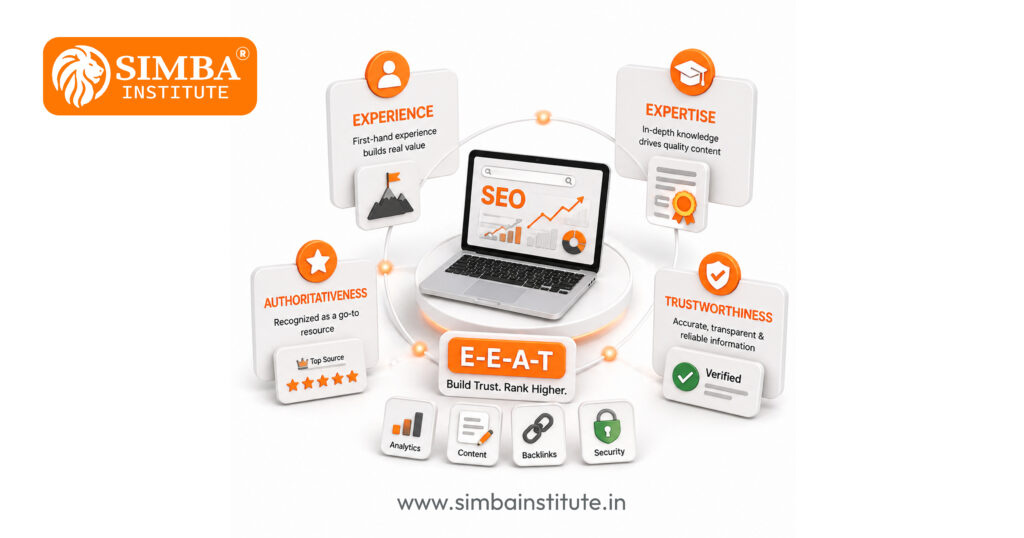
The term “E-E-A-T,” created by Google, is now used by SEOs to define the caliber of their website. Many people in the SEO business use this phrase, particularly when talking about algorithm updates. With Google’s recent announcement of the The acronym E-E-A-T stands for Expertise, Power, Trustworthiness, and Experience. This idea, something Google out as part of the Searching Quality Score Guidelines, is used to rank and rate web pages according to the quality of their content. Every part is explained in the parts that follow: Experience: The practical knowledge gained through direct involvement or exposure to a specific topic or field is referred to as experience. It is all about getting hands-on experience and taking up information through real-life situations. A fitness trainer having many years of client-facing experience, for example, would be considered as experienced in the field they work in. Expertise: The extent of knowledge and proficiency provided by the website and content producer is known as competence. It is all about showing your understanding of an area of study or business. For example, you might think that a writer with experience in dietetics or nutrition science would come up with an essay about nutrition. Authoritativeness: In the specific area or business, the standing and confidence of the content supplier or website are variables that define its authoritativeness. It has to do with getting recognized as a specialist in an area of expertise. Information from reliable sources can be obtained on websites or from people who are seen as authorities. This could include renowned professionals, reputable institutions, or strong organizations. Trustworthiness: Trustworthiness depends mainly on dependability and regularity. It aims to make sure the data presented is true, open, and supported by trustworthy sources. Users need to have trust that the content they have access to is trustworthy and doesn’t include any misleading or inaccurate data. 2024 Helpful Content Update, it recently became a hot subject. Google revealed the addition of E to E-A-T in late 2024, so I made the decision to update this article. I’m going to explain what E-E-A-T is, why it’s important, how algorithm changes affect it, and how to make your website’s E-E-A-T better. What is E-E-A-T? E-E-A-T is an acronym for knowledge, experience, authority, and integrity. It aids Quality Raters in evaluating and assessing the value of the primary material on your website. The quality of search engine data is assessed by individuals known as quality raters. For instance, Google uses their input to compute how well the search engine algorithm performs and to enhance it for a better user experience. (UX). When information is simply at our fingertips in today’s digital world, it is essential to ensure the reliability and accuracy of internet content. The E-E-A-T framework—which stands for Experience, Expertise, Authoritativeness, and Trustworthiness—has become growing in importance, especially in the field of search engine optimization (SEO) and content growth. Let us explore E-A-T in greater detail and see why it matters so much in the digital environment. Let’s examine each of these words’ definitions so that you can comprehend E-E-A-T better: High level of knowledge in a specific field is known as expertise. It demonstrates that the publication disseminated accurate knowledge. Experience, the most recent E-E-A-T signal update. Experience measures how much first-hand knowledge a publisher has of a given subject and rates the content’s quality in accordance. Trust is therefore the most crucial component of this communication. Authoritativeness emphasizes the credibility and standing of the website’s creator. Credentials, area of specialization, and verified user reviews all have an effect. Trustworthiness demonstrates that the information in the piece comes from reliable sources. For instance, adding an SSL certificate to your website helps to demonstrate its legitimacy and reassures users that their data is secure. How does Google determine E-E-A-T? Now that we have defined what E-E-A-T is, let’s talk about how Google determines a page’s E-E-A-T. At a high level, the Google search quality evaluator rules outline four key components: Personal knowledge of the subject. Expertise of the Main Content’s author. the Main Content’s creator, the website’s credibility, and the Main Content itself. the Main Content’s creator, the Main Content itself, and the website’s dependability. Is Google’s E-E-A-T a Ranking Factor? E-E-A-T does not directly affect rankings. It’s a notion for how we might gauge the caliber of our material. Google’s Danny Sullivan explained how the algorithm doesn’t explicitly measure E-E-A-T in a Tweet. Google makes an effort to identify E-E-A-T, though, by using additional ranking factors like reviews, authorship history, what links say about a company, and more. Even though it isn’t a straight ranking factor, it should be taken into account in your strategy. Why Is Google’s E-E-A-T Important for SEO? I’m pleased that the days when keyword stuffing and the quantity of links could affect a website’s ranking in search results are long gone. Google now puts the customer first and is user-centered. E-E-A-T is significant because of this. I answer the following queries in order to concentrate on the user: What exactly is the customer looking for? Will the user’s experience be positive? Will the user find the information useful? Through keyword research and an understanding of the search purpose, I respond to the first query. For the second query, I first look at a site’s Core Web Vitals, but I also want to make sure I take interstitials, text size, and other factors into account. The third query aims to determine the value of my information. Its objective was accomplished if it satisfied the search aim. However, accomplishing the goal doesn’t stop there. To describe the caliber of our material, we use the acronym E-E-A-T. We must make sure that users see material that not only satisfies their needs but also gives them the confidence that the data they received is reliable. Not all topics require adherence to this quality idea. During their evaluation, the Search Evaluators also take that into account. But because YMYL subjects generally have the potential to cause harm, material accuracy becomes crucial. Your Money Your

What is E-E-A-T & Why it’s Important Read More »

Blog
Scroll to Top