
simbainstitute

Mega Dropdown Courses

Blog

the top 7 benefits of an irresistible lead magnet 870x457

Lead Magnet can increase the size of your email list while gaining the respect and authority of your online audience. A lead magnet is necessary! What a lead magnet is and how it can help your business are covered in this article. A lead magnet is a piece of content you provide as a “freebie” in exchange for your audience’s contact information. The lead magnet helps you develop a relationship with your consumer and maintain brand awareness even while it doesn’t generate any immediate income in an effort to encourage a later transaction. Here are seven advantages that an alluring lead magnet can bring to your company. 1. Grow your database Using an email database to engage your online audience is a great strategy. Compared to social media, email marketing initiatives have statistically greater click-through rates because they are more personalised, focused, and targeted. Small businesses, coaches, consultants, and organisations in the health and social services sectors all benefit greatly from this focused strategy. A lead magnet is a very powerful and effective tool for expanding your email list. A person’s willingness to provide their email and sign up for your lead magnet indicates that they are interested in what you have to offer and recognise the value of your services. From there, you can develop a relationship with that person and win their business. 2. Showcase expertise Include worthwhile and original material in your own lead magnet. This will demonstrate your knowledge and position you as a leader in the field. By providing content that your audience wants to hear rather than just what you want to say (yes, these can be two distinct things! ), try to differentiate yourself from rivals. 3. Develop trust A lead magnet expands your database while also giving potential customers a taster or trial. It gives customers the ability to discover more about your strategy and gain confidence in your company prior to making a purchase. 4. Build authority The creation of niche-specific content and participation in current market trends are crucial components of increasing your online authority. Building authority is having a passionate audience who promotes your business, not just having the most followers or blog articles on your website. Your online authority will rise when you provide an exceptional lead magnet that stands out from the competition and provides value. 5. Lead Magnet Provide value Your lead magnet should provide so much value to your customer that they are motivated to get back in touch with you. In any sector, a successful lead magnet must provide value. Why would anyone download this article if it weren’t irresistible? That’s why we titled it The Top 7 Benefits of an Irresistible Lead Magnet. The best lead magnets are extremely valuable, audience-specific, and provide immediate delight. Your lead magnet should be engaging and actually benefit your audience, whether it is accessing exclusive material, learning their test result, or downloading a useful checklist. Even better, it provides tools to aid in problem-solving and solves a pain area. 6. Niche your audience There is a good probability that the people who visit or follow you on social media are already interested in your topic. If you are a business coach, your clients may be aspiring businesspeople or entrepreneurs. Your target market is someone interested in fitness if you work as a personal trainer. Or if you run a social care business, your target market might be in need of assistance. Your lead magnet should speak to a problem that your niche has that is common. 7. Stay front-of-mind You can maintain brand awareness and stay at the forefront of your audience’s minds by developing a lead magnet that they may use repeatedly. Additionally, keeping your audience interested requires sending news, updates, and discounts to your database using your newly expanded email list. You will be the first business that comes to mind when searching for services similar to yours. Making an alluring lead magnet is quite beneficial for your business. We provide complete lead magnet creation services, including content writing, graphic design, and technical setup. To maximise the value of your lead magnet, we’ll even assist you in marketing it. Engage your audience and provide them with what they desire. Increase your conversion rate by starting to compile an email list of visitors who are interested in your offerings. What you’ll get: A 20-minute phone call will serve as the consultation to select the ideal lead magnet for your audience. The important elements for the content will be all we require, and the creative team will get to work designing an alluring lead magnet for you.

The Top 7 Benefits of an Irresistible Lead Magnet Read More »
facebook poll ads best practices ad specs to get started 870x457

Engaged social media users frequently wish to have a bigger impact overall. They demand a say in important decisions that brands make. As a result, brands enable both of these. Digital advertising on social media is changing from one-way communication to a constant conversation between brands and customers thanks to GIFs, lives, reactions, emoticons, facial filters, augmented reality, and playable commercials. By including the polling sticker to Stories advertising in March 2019, Instagram enabled businesses to start interacting with customers more closely: The new Instagram Stories ad type is currently in open beta. increased average video views by 3 seconds lowered the cost per video view by 20%. increased app installations by 40% Following the popularity and success of the brand-new interactive ad from Instagram, Facebook Ads made the decision to add polling functionality to their platform. Here come the Facebook Poll ads. What are Facebook Poll Ads? In a video ad campaign, poll ads incorporate a question and several possible answers, allowing viewers to participate in an interactive experience and voice their opinions. In the Facebook mobile News Feed, the following new ad format appears: How and why to use Facebook Poll ads Brands may use Facebook Poll advertisements to:  Discover which goods, services, or content will appeal to their audience the most. gather data to create new products or services or to enhance existing ones. Make sure they have a market based on the desires, requirements, and problems of customers. Develop stronger, more likeable connections Increased engagement, interaction, brand awareness, and conversions are generated by Facebook video poll ads. Delivering content that consumers want leads to increased engagement, and the more interaction a user has with a brand, the more probable it is that they will remember it and make a purchase. In fact, five out of nine brand lift studies conducted during beta testing found that poll advertising raised brand awareness more so than conventional video ads. The adoption of the new format by E! Entertainment is explained by Eric Eckstein, Senior Director of Digital Marketing at E! Entertainment: E! is always looking for more meaningful ways to engage its audience. Prior to the release of Season 4 of Total Bellas, the introduction of Facebook Poll advertisements provided us with an amazing opportunity to employ media in a creative and interactive way. Giving viewers a chance to connect with the show enabled us to develop significant interactions that fueled success throughout the Season. Ad specs Poll advertisements adhere to regular mobile video ad specifications because they are mobile video ads with polls included. Design Recommendations The majority of file types are supported, but it is advised to use H.264 compression, square pixels, fixed frame rates, progressive scan, and stereo AAC audio at 128kbps+. 9:16 to 16:9 in the video Resolution suggested: Upload a video with the greatest resolution that is feasible while staying under the allowed file size and aspect ratio constraints. 4GB for the video file Max Captions: Not required but advised Sound is optional but advised. 125 characters total Deliveries of video thumbnail pictures with more text than 20% may be lowered Videos that are vertical and have an aspect ratio taller than 4:5 can be changed to 4:5. Headline for link: 25 characters 30 character limit for link description Objectives: Brand Awareness Reach Traffic App Installs Conversions Technical Requirements Video duration: 1 second to 241 minutes Video dimension: At least 120 pixels by 120 pixels Video size: 1MB to 26GB Video aspect ratio: 100×400 to 400×100 Best practices for video poll ads In addition to several guidelines particular to polls, poll commercials also adhere to many of the general best practises for mobile video ads: Keep videos short If your video advertisement is 15 seconds or fewer, viewers are more likely to stick around to the conclusion. Instagram Stories and Facebook in-stream placements are also available for video ads that are 15 seconds or less long. Capture attention quickly To capture and hold viewers’ attention, the most intriguing section of your video should appear inside the first three seconds. Feature your product or brand message early In order to raise brand awareness, you need quickly demonstrate your brand identity, just as you want to grab attention quickly: Use vertical or square video Choose a vertical or square aspect ratio to maximise the amount of screen real estate since most people hold their phones vertically. Design for sound off Use text, graphics, and captions whenever you can because many people watch videos without sound. Keep polls short Shorter poll questions typically perform better since they encourage user participation without taking away too much attention from the video. Make polls meaningful Ask meaningful questions rather than ones that only have “Yes” or “No” replies. Make your inquiry more interesting by using words like “Yes, without a doubt!” or “Absolutely no way.” if you want a yes/no response: Avoid trivia questions Trivia-style questions typically draw less participation. Do not “bait” users Baiting users to “like” or “react” to your content Comment-baiting is the practise of soliciting responses in comments. Asking individuals to share the post with their friends is known as “share baiting.” Tag baiting is the practise of requesting friends’ tags. Vote baiting is the practise of enticing individuals to cast ballots by leveraging their reactions, comments, shares, or other ways. Direct traffic to a post-click page Although adding URLs for each selection is optional, it’s best practise to direct users to another page after they vote: Send traffic to certain post-click landing pages because that is where conversions take place for the best outcomes. How to set up poll ads To add a poll to your video ad: Click Create when you are in Ads Manager. Select (Brand Awareness, Reach, Traffic, App Installs, or Conversions) an objective that supports Poll Ads, then click Continue. Click Continue after selecting your targeting, placements, and budget. Select a video from the media library or upload a new one under Format. To add a poll, click on it. Enter your poll

Facebook Poll Ads: Best Practices & Ad Specs to Get Started Read More »

seo vs sem whats the difference 870x457

SEO vs SEM both are essential marketing strategies used to increase website traffic, draw in potential clients, and establish brand authority. But what do SEO and SEM actually do?  We’ll go over exactly what SEO and SEM are, how they operate, and why they’re so crucial in this article. After that, we’ll compare SEO and SEM to assist you decide which to employ and when. 1. An introduction to search marketing and SEO vs SEM Ever felt the sudden urge to look for a plumber or a pair of purple magic socks? That must be a no on the plumber, in my opinion. The proprietor of the website selling your soon-to-be-magical pair of socks uses search engine marketing to gain visibility on search engines like Google, Yahoo, Bing, and others. Through SEO or SEM, they can do that. SEO (search engine optimization) includes all the actions our magic socks shop will do to increase the likelihood that people will find their socks website through natural search results (i.e., without paying a search engine to display their website). SEM (search engine marketing) is the practise of paying search engines to list the website in the SERPs when people are looking for magic socks. So, while SEM and SEO are both types of search marketing with the same overall objective, they operate in distinct ways. Now let’s examine each in further detail, beginning with SEO. 2. What is SEO? In order to rank well on the Search Engine Results Page (SERP) naturally, website owners utilise a set of strategies called search engine optimisation (SEO). It is a technique for getting your website and other material to show up among the top results when a person searches for associated terms. Google, Baidu, Bing, Yahoo, Yandex, and DuckDuckGo are the top search engines. The majority of conversations among marketers regarding SEO centre around Google because, according to Statcounter, a website traffic tracker, it holds 91.86% of the market. We’ll do the same throughout this piece. How does SEO work? Let’s use common sense! The search engine results for “magic socks” are shown in the following snapshot. Why do you suppose Google displayed these to me?  Google selected the top three results from a crawl of 73.1 million websites in 0.98 seconds based on the assumption that they would be the most relevant to my search. This was determined by a number of things. The purpose of the used keywords can also be ascertained by search engines. For instance, I searched with the transactional term “sale,” suggesting that I wasn’t just seeking for magic socks but also wanted to buy them.  Types of SEO There are three techniques for search engine optimisation. Each is designed to take into account the various indications that Google considers when determining which websites to rank and in what order.  On-page SEO All the SEO components you may manage and improve directly on a web page are referred to as on-page SEO. This comprises elements like the written text and material present on a page, headers, pictures, and alternative text for pictures. Here is a detailed list of the on-page SEO ranking elements.  For instance, we have used H1, H2, or H3 tags to indicate the heads in this article. This terminology aids Google’s crawlers in comprehending our content and its organisational structure.  How websites have used keywords in their text is another aspect of on-page SEO that Google takes into consideration. They consider keyword density and relevancy.  Technical SEO These are technical website optimisations that focus on factors like as mobile friendliness, site loading speed (Google suggests a loading time of 3 seconds or less), crawl problems, and the inclusion of sitemaps. Technical SEO is frequently the domain of site developers and SEO experts. Off-page SEO Anything that takes place outside of your own website or content that may have an impact on how it ranks in the search results is known as off-page SEO. This includes adjustments for characteristics that search engines employ as off-page signs of authority to influence ranking, such as backlinks, referring domains, and social media shares.  For instance, if someone links to a blog post you’ve published while writing their own blog post, they are telling Google that your content is pertinent to their term or subject. Off-page SEO is that! 3. What is SEM? SEM involves paying search engines to display your web pages when relevant keywords are searched for, whereas SEO concentrates on bringing “free” organic traffic to your website. Another name for it is Pay Per Click (PPC).  Why is SEM important? Search engine marketing is used by businesses to outrank rivals who rank more highly naturally and to safeguard their brand. For instance, if Apple introduces a new iPhone and runs a successful TV ad promoting it, Samsung (seeing that the ad would drive people to Google) could run pay-per-click advertisements against “new iPhone” searches, provide an alternative, and convert part of that traffic.  With the advantage that Google prioritises brand owners on advertisements against their own brand terms, Apple would also run PPC ads against searches for “new iPhone” in order to combat this. As a result, it would show up twice in the SERP. 4. SEO vs SEM: What’s the difference? As we’ve already established, search marketing includes both SEO and SEM. Now that we know what they all mean, let’s think about how they differ from one another. The following list outlines the differences: SEM results are identified as “Ads” on the SERP page. Results from SEO aren’t. Google does this to help users tell commercial results from natural search results. SEM results, in contrast to SEO results, are tailored to a particular user demography. In addition to keywords, SEM results target people based on information like location and time. The relevance of the ranking pages to the keyword queries determines how relevant SEO results are to all users. SEM and SEO use several ranking variables. On-page criteria like keyword relevance, off-page factors like the number of websites referring back to the page, and

SEO vs SEM: What’s the Difference? Read More »

how to create an effective ecommerce content marketing strategy 870x457

Today, we’re offering our solution to assist DTC brands grow quickly through content marketing. We’ll lay out how to find the best content types to write about, develop realistic ranking targets that will lead to greater sales, and analyse your progress to drive better outcomes moving forward in order for you to adopt the same strategy for your business. Prefer to work with professionals who perform this work regularly? Give us a little background information about yourself, and we’ll set up a free consultation call. What Is an eCommerce Content Marketing Strategy? A content strategy for e-commerce sites is a strategy for planning, producing, and distributing high-quality material that target audiences will find. However, the secret is to accomplish it in a way that generates a solid ROI. Typically, this is done through lengthy posts produced through carefully thought-out SEO blogging. Once things are confirmed, other factors could include: Email marketing Infographics Lead magnets Video content plus more. Making an ecommerce-based content plan for your store requires taking a different approach from your grandmother’s marketing strategies.In contrast to a conventional hard sell, the majority of examples of ecommerce content use a soft sell that creates trust by resolving an issue. These tactics are at the top of the list for content trends in 2022 because they are so effective (provided that the brand in question genuinely offers relevant information in its content).Your goal, or more precisely, your ecommerce roadmap strategy, is to produce top-notch content that ranks well on Google, converts site visitors into leads, and sells like hotcakes for you.If you don’t already have an ecommerce strategy centred on content, do it right away. And always start with blogging (it has the longest content lifespan available).For a variety of reasons, which I’ll explore next, your content strategy for your e-commerce website is EXTREMELY critical. Why Should I Create a Content Strategy for My Ecommerce Website? Don’t even begin to discuss the ROI of content marketing with me (or do, I’ll go on and on about it)! The following are just a few advantages of a well-executed ecommerce content strategy: Content marketing provides immediate responses to leads’ inquiries, which increases credibility, trust, and sales. It can generate a tonne of traffic for your e-commerce website. Compared to paid advertising, there is a huge ROI (and organic social performs 1,000 times better). It’s a strategy to distinguish and update your brand. Your conversion funnel is expertly optimised by ecommerce content marketing to dramatically increase those conversions (yes, even “while you sleep”). In addition to any other streams of income you may have (like a brick and mortar store), it can (and should) become your main source of income. Sustainable content strategy can help you create an empire over the long term because it can multiply over time. It takes courage to run a business, and ecommerce firms are no exception. You’ll not only increase sales once you’ve developed a repeatable content marketing ecommerce plan, but you’ll also have the clarity and concentration necessary to scale to extraordinary heights online. Next, I’ll walk you through the steps of developing a successful e-commerce content strategy. Our Proven Ecommerce Content Marketing Strategy Our content approach is divided into four parts. Analyse both you and your rivals Map out the content categories you should concentrate on and your short- and long-term ranking objectives. Review performance and change course for better outcomes. 1. Audit Yourself and Your Competition Understanding how you compare to your competitors is the first step in expanding your business through content marketing. Analyse your biggest competitors first. Here, Lauren White explains how we go about examining your competitors. Draw a map of their best-performing content, valuable keyword rankings, most-linked pages, and other factors. Then go through the same procedure with your e-commerce website. Ask yourself the following questions: Where do your rivals rank higher than you? What pages do your rivals own that you don’t? What kind of content does their website publish? Sort those keywords into categories for which you can create in-depth materials. Ask yourself if you can develop one resource that would satisfy someone searching for those two independent keywords whenever you’re unsure whether to create two separate resources for two keywords. Create two distinct resources if not. 2. Identify What Types of Content to Focus On The most prosperous e-commerce companies focus their content efforts on certain content objectives.We break this into four components: Content that promotes awareness sales thought leadership and culture (we’ll bypass this one for now). Awareness Content drives brand awareness to expand exponentially. The larger, informative resources that your target audience looks up online make up awareness content. Sales Centric Content increases conversions and income. Sales-focused content includes: Resources that explain how your product alleviates customer problems Comparisons between your product and similar alternatives Case studies and customer testimonials Resources for customer service that enhance the client experience and promote repeat business (such as product tutorials, FAQs, etc.). Thought Leadership Content draws the titans in your sector to increase the authority of your brand. The creation of thought leadership content requires years of industry knowledge due to its unique procedures, industry projections, and other insights. Although this content won’t receive much exposure, getting it in front of industry influencers will motivate them to support you and promote your content with their followers on social media, boosting the legitimacy of your business. Finding the Right Balance Between Content Types For determining how much of your efforts should go into each form of content, there is no simple answer. But until they achieve a few thousand readers per month, we advise firms to concentrate their efforts primarily on sales- and awareness-focused content. Few direct sales will be generated via awareness content. However, awareness content raises brand awareness, makes it much easier to develop links to it, and directs users to sales-focused content and particular product pages. High conversion rates and much more purchases per website visitor can be expected from sales-focused content. However, search engine traffic to

How to Create an Effective eCommerce Content Marketing Strategy? Read More »

help shoppers find your store with local seo 870x457

As the most lucrative time of the year for businesses approaches, it’s important to take advantage of the nearly 46% of Google searches that are looking for local information. There has never been a time when the proverb “a world of information at our fingertips” was more true. The days of typing your location, town, or even city into a search engine to locate local information are long gone. Now, Google can utilise your precise position to discover the closest eateries, pubs, or stores if you’re seeking them. It makes perfect sense to be prepared to appear for these searches given that 84% of searches were classified as “discovery” in the analysis. With the help of this helpful guide, learn how to enhance your local SEO efforts. What is local SEO? Local SEO is a branch of search engine optimization that puts a greater emphasis on local and regional businesses and merchants in search results. For instance, local SEO for a pizzeria seeks to make sure that locals searching for a pizzeria may find it in the search results. Local SEO refers to search engine optimization for a company’s specific location.  Why local SEO? Anyone with solid SEO and domain authority can rank for a search query like “how to make a Christmas wreath,” but when the query has a purchase intent, it is more likely to become something like “wreath making classes near me” or “wreath making classes in [location],” for instance. Search engines recognise that the user is looking for business recommendations based on location for these types of search queries, which frequently include a location or ‘near me’ – although this isn’t necessary if Google Maps is used or if Google knows your location – and so they provide that information. Local SEO is crucial and merits investment alongside traditional SEO due to the difference in conduct and outcome. – Should you prioritise local SEO? Local SEO statistics: According to Internet Live Stats, Google receives over 70,000 queries every second on a daily basis. Google representative on Twitter: “Now 46% of searches have local intent.” Each month, 157 direct searches and 852 discovery searches yield results for the typical company. According to the Bright Local Study, this equals an average of 1,009 searches every month. According to HubSpot Marketing Statistics, 72% of customers who performed a local search visited a retailer within 5 miles. Within 24 hours, 88% of mobile searches for local businesses result in a call or visit. Nectafy 78% of location-based smartphone searches lead to an offline transaction, according to the SEO Tribunal. “near me” and “close by” search volume increased more than 900% in just two years, according to Chat Metre Read more about this topic in our article relating to near me searches. You’re missing a trick if your setup doesn’t allow you to track local searches. Local Ranking Factors On the appearance, local searches operate similarly to other Google searches. But when determining how to rank search results in local search, Google may employ many ranking factors. More and more search phrases are getting local results as Google seeks to tailor its search results. The two different types of local search results are the local pack and local organic results. The Local Pack is made up of the top 3 closest businesses that are located closest to the searcher. These are displayed together with their location on Google Maps on the first search results page. Factor one – Location relevance It’s crucial to let Google know where you are in order for your website to display when a user is nearby if you want to be in the map pack. Create structured data, such as addresses, phone numbers, and business hours. Schema markup language, for instance, can be helpful. Factor two – On-Page Page level optimization tactics are part of on-page SEO and help websites rank higher in search results. Sticking to on-page SEO best practices can help your website perform better, especially in organic local results where there is frequently less competition. Use concise, readable URLs. The user and search engines can more quickly and readily understand what is behind a page by having clear, straightforward URLs. Including the target location in the URL structure will help you readily identify each location page if you have many location pages. Improve the title tag. Users want to locate businesses that meet their search criteria as rapidly as possible via the local search. This requires a title tag that is clear and pertinent. Make sure it is optimised for search engines by including the goal term you want to rank for as well as your desired location. Make your meta description interesting. Although they do not directly affect rankings, meta descriptions are nonetheless crucial for increasing page traffic. Your click through rate may be increased with the use of local keywords in a captivating meta description that is effectively written. Optimise the photos you use. You can also rank with photos in Google image search in addition to your webpages. Giving your photographs meaningful, understandable file names will help you optimise them and will increase your local relevance. You can also mention the location the image represents in your alt attributes. Factor three – Authority A solid backlink profile can still be of tremendous assistance in getting your site to appear in the results for the local organic search results. Ranking criteria still have an impact locally, linking comprehension. Create local citations and backlinks that are pertinent to the area (such as listings in business directories, profiles on review sites like Yelp and Tripadvisor, mentions in local media, etc.). How to ensure you’re in the game… There are three ways to compete organically. #1 Set up a Google My Business listing It’s Google’s response to giving proprietors the control over how their establishment appears on Google Search and Maps (10 films that would have worked perfectly if they had Google Maps). Google My company (GMB) is a free company profile that allows owners the options

Help Shoppers Find Your Store with Local SEO Read More »

8 tips to increase your organic reach on social media 768x403

It might be incredibly difficult to increase your social media organic reach. There is intense competition between various brands and businesses on social media platforms. Additionally, each platform employs a unique algorithm to function. While sponsored and paid content is a surefire approach to reach your target audience, you still need to have a solid social media strategy for the purpose. It’s a fact that paid advertisements are expensive, and not all companies can afford to employ them frequently. You can maximise the reach of your business on social media with the appropriate blend of paid and organic content. Organic methods make it challenging but not impossible to attain the required outcomes. With the correct social media tactics, several brands have successfully achieved their objectives organically. The eight best techniques to increase your social media reach organically are discussed in this blog. 1. Choose the right platforms to market your brand Brands and businesses can now be found on a variety of social media platforms. The first step to achieving the desired social media reach is selecting the appropriate platform. Additionally, not every social media site needs to have a profile. Every social media platform has a set of guidelines known as an algorithm that controls how content is presented to you in your newsfeed. You must comprehend how each social media platform’s algorithm functions if you want to increase your organic reach on those platforms. After all, the algorithm will control how the material appears in the feeds of your audience. As a result, choose your marketing channels wisely. 2. Right audience selection Engaging with your audience on social media is necessary to increase your organic reach. But first, the right target market must be selected. The amount of audience engagement you get on social media is a typical component that influences the algorithm on those platforms. The more often you interact, the wider your organic reach will get, but only if you pick your audience carefully. Be sure to reply to any and all comments, criticisms, and praise you may get on your social media profiles. The effect will be that you can improve your feed rating. Brands frequently are unable to expand their organic social media reach due to inadequate audience selection. Utilize social media analytics software to learn more about your audience and implement your strategies accordingly. 3. Encourage user-generated content User-generated content UGC serves the same purpose as peer reviews for your brand. The more people share your material, the greater your chances are of expanding your organic reach. You can start campaigns using hashtags. For your brand, develop a fresh hashtag. Then you can request that your audience post material that features your company or its goods. It is crucial to include the marketing hashtag in the captions as well.Set up  campaigns with incentives, where you can offer rewards for content showcasing your company or its products or simply showcase their content in your feed. Your brand’s social media reach will grow as a result. Starbucks deserves praise for their exceptional user-generated content engagement and reach. One of the Instagram user-submitted posts that Starbucks posted is this one. 4. Conduct live streaming sessions Live-streaming material could be quite helpful for boosting social media’s natural reach. Live videos are an excellent way to promote in-the-moment conversation. Because live videos are interactive, brand engagement greatly increases. The greater the engagement, the more views your content will acquire. Engaging live broadcasts that compel your audience to comment and respond are the key to mastering your social media organic approach.Benefit Cosmetics’ Facebook Live video feed had about 31k views. This is just one example of the many ways that different brands have used live streams to broaden their audience and enhance engagement. 5. Post less but meaningful content The quality of your material should take precedence over the quantity of posts you make on social media if you want to increase your organic reach on those platforms. Focus on producing material that enhances interactions between your audience members. It won’t work to post too frequently only to get your material on consumers’ news feeds. The majority of algorithms favor user-engaging content. Instead than wasting time and money on multiple social media updates, focus on improving the quality of your content. 6. Monitor your content performance with analytics tools Use a social media analytics platform like Unbox Social to gain important insights and information about your content. You can keep an eye on your social media engagement and reach with the help of this tool.With the use of the tool, you can keep tabs on all the important data including reach, impressions, follower growth, and engagement rate. Which content postings drew the most attention and interaction? Which ones failed? In relation to the consistency of your content, have you seen any patterns? You may get crucial information about your social media activities using our social media analytics tool. Look at your most read blog posts to find out which parts of your material people appreciated. You might employ a similar strategy for your next content posts. You can get detailed audience analysis data from Unbox Social in addition to the metrics mentioned above. 7. Focus on the type of content you post Social media platforms support many types of material, but not all of them will provide you the necessary reach. Despite the fact that firms have had success marketing using simple text-based posts, this does not imply you should do something different. If you want to expand the reach and engagement of your audience on social media platforms, concentrate on creating video content. To keep their audience interested and increase their audience reach, marketers may alternate between Facebook Live, Instagram Reels, and many other formats. Videos also have a strong propensity to be shared, which is advantageous for boosting organic reach. 8. Time your posts well The most crucial factor in adding material to social media is timing.Every social media network is bursting at the seams with content, and fresh user-generated content is

8 Tips to Increase Your Organic Reach on Social Media Read More »

what is e e a t why its important google e e a t and seo 768x403

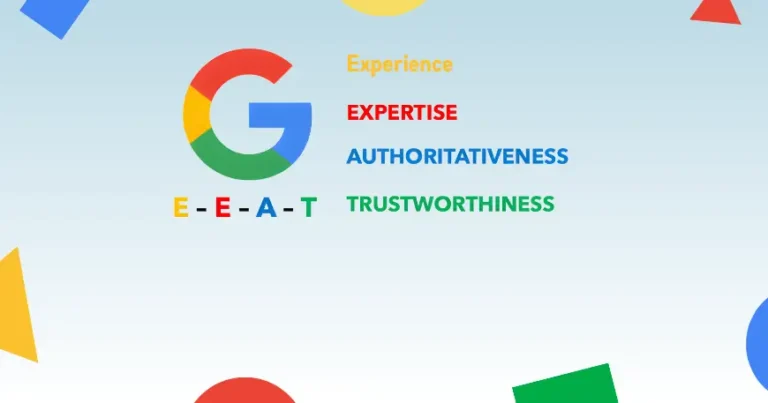
The term “E-E-A-T,” created by Google, is now used by SEOs to define the caliber of their website. Many people in the SEO business use this phrase, particularly when talking about algorithm updates. With Google’s recent announcement of the The acronym E-E-A-T stands for Expertise, Power, Trustworthiness, and Experience. This idea, something Google out as part of the Searching Quality Score Guidelines, is used to rank and rate web pages according to the quality of their content. Every part is explained in the parts that follow: Experience: The practical knowledge gained through direct involvement or exposure to a specific topic or field is referred to as experience. It is all about getting hands-on experience and taking up information through real-life situations. A fitness trainer having many years of client-facing experience, for example, would be considered as experienced in the field they work in. Expertise: The extent of knowledge and proficiency provided by the website and content producer is known as competence. It is all about showing your understanding of an area of study or business. For example, you might think that a writer with experience in dietetics or nutrition science would come up with an essay about nutrition. Authoritativeness: In the specific area or business, the standing and confidence of the content supplier or website are variables that define its authoritativeness. It has to do with getting recognized as a specialist in an area of expertise. Information from reliable sources can be obtained on websites or from people who are seen as authorities. This could include renowned professionals, reputable institutions, or strong organizations. Trustworthiness: Trustworthiness depends mainly on dependability and regularity. It aims to make sure the data presented is true, open, and supported by trustworthy sources. Users need to have trust that the content they have access to is trustworthy and doesn’t include any misleading or inaccurate data. 2024 Helpful Content Update, it recently became a hot subject. Google revealed the addition of E to E-A-T in late 2024, so I made the decision to update this article. I’m going to explain what E-E-A-T is, why it’s important, how algorithm changes affect it, and how to make your website’s E-E-A-T better. What is E-E-A-T? E-E-A-T is an acronym for knowledge, experience, authority, and integrity. It aids Quality Raters in evaluating and assessing the value of the primary material on your website. The quality of search engine data is assessed by individuals known as quality raters. For instance, Google uses their input to compute how well the search engine algorithm performs and to enhance it for a better user experience. (UX). When information is simply at our fingertips in today’s digital world, it is essential to ensure the reliability and accuracy of internet content. The E-E-A-T framework—which stands for Experience, Expertise, Authoritativeness, and Trustworthiness—has become growing in importance, especially in the field of search engine optimization (SEO) and content growth. Let us explore E-A-T in greater detail and see why it matters so much in the digital environment. Let’s examine each of these words’ definitions so that you can comprehend E-E-A-T better: High level of knowledge in a specific field is known as expertise. It demonstrates that the publication disseminated accurate knowledge. Experience, the most recent E-E-A-T signal update. Experience measures how much first-hand knowledge a publisher has of a given subject and rates the content’s quality in accordance. Trust is therefore the most crucial component of this communication. Authoritativeness emphasizes the credibility and standing of the website’s creator. Credentials, area of specialization, and verified user reviews all have an effect. Trustworthiness demonstrates that the information in the piece comes from reliable sources. For instance, adding an SSL certificate to your website helps to demonstrate its legitimacy and reassures users that their data is secure. How does Google determine E-E-A-T? Now that we have defined what E-E-A-T is, let’s talk about how Google determines a page’s E-E-A-T. At a high level, the Google search quality evaluator rules outline four key components: Personal knowledge of the subject. Expertise of the Main Content’s author. the Main Content’s creator, the website’s credibility, and the Main Content itself. the Main Content’s creator, the Main Content itself, and the website’s dependability. Is Google’s E-E-A-T a Ranking Factor? E-E-A-T does not directly affect rankings. It’s a notion for how we might gauge the caliber of our material. Google’s Danny Sullivan explained how the algorithm doesn’t explicitly measure E-E-A-T in a Tweet. Google makes an effort to identify E-E-A-T, though, by using additional ranking factors like reviews, authorship history, what links say about a company, and more. Even though it isn’t a straight ranking factor, it should be taken into account in your strategy. Why Is Google’s E-E-A-T Important for SEO? I’m pleased that the days when keyword stuffing and the quantity of links could affect a website’s ranking in search results are long gone. Google now puts the customer first and is user-centered. E-E-A-T is significant because of this. I answer the following queries in order to concentrate on the user: What exactly is the customer looking for? Will the user’s experience be positive? Will the user find the information useful? Through keyword research and an understanding of the search purpose, I respond to the first query. For the second query, I first look at a site’s Core Web Vitals, but I also want to make sure I take interstitials, text size, and other factors into account. The third query aims to determine the value of my information. Its objective was accomplished if it satisfied the search aim. However, accomplishing the goal doesn’t stop there. To describe the caliber of our material, we use the acronym E-E-A-T. We must make sure that users see material that not only satisfies their needs but also gives them the confidence that the data they received is reliable. Not all topics require adherence to this quality idea. During their evaluation, the Search Evaluators also take that into account. But because YMYL subjects generally have the potential to cause harm, material accuracy becomes crucial. Your Money Your

What is E-E-A-T & Why it’s Important Read More »

Scroll to Top